
Tunnel ventilation explained, for a Bangladeshi poultry house
Tunnel mode pulls air the length of the house and over the birds. What it needs to work, when to switch into it, and why a leaky house wastes every fan.
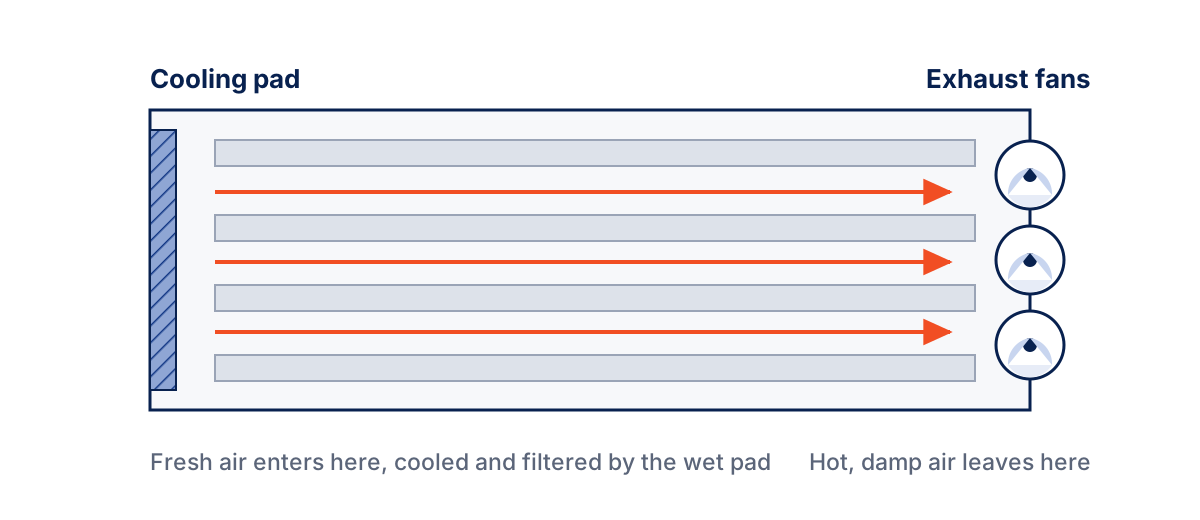
Tunnel ventilation means air enters at one end of the house and leaves through fans at the far end, so it travels the whole length of the building and passes over every bird on the way. The birds are cooled by the moving air, not only by the temperature of it. It is the single most effective thing you can do for a flock in hot weather — and it only works in a house that is properly sealed.
Two modes, two jobs
A closed house runs in one of two ways, and confusing them is the most common ventilation mistake.
Minimum ventilation is for cold or mild weather. A small number of fans run on a timer or by the controller’s minimum air volume curve, and air comes in through air inlets high on the side walls so it mixes with warm air before it reaches the birds. The job here is removing moisture, ammonia and carbon dioxide — not cooling.
Tunnel ventilation is for hot weather. The side inlets close, the tunnel opening at one end opens, every fan runs, and air moves fast down the length of the house. The job here is cooling the birds.
The switch between them is a decision about temperature and bird age, and it is exactly the decision a controller should be making rather than a person guessing.
What tunnel mode needs
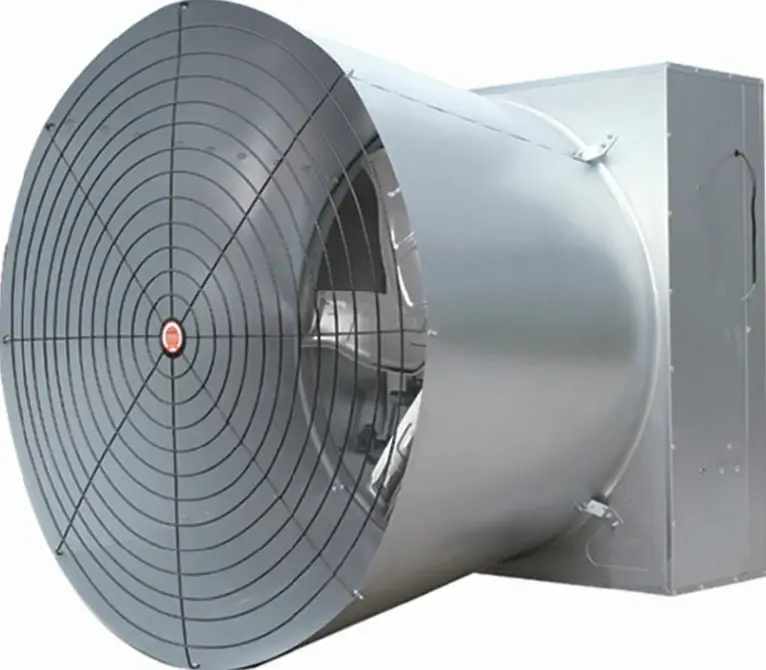
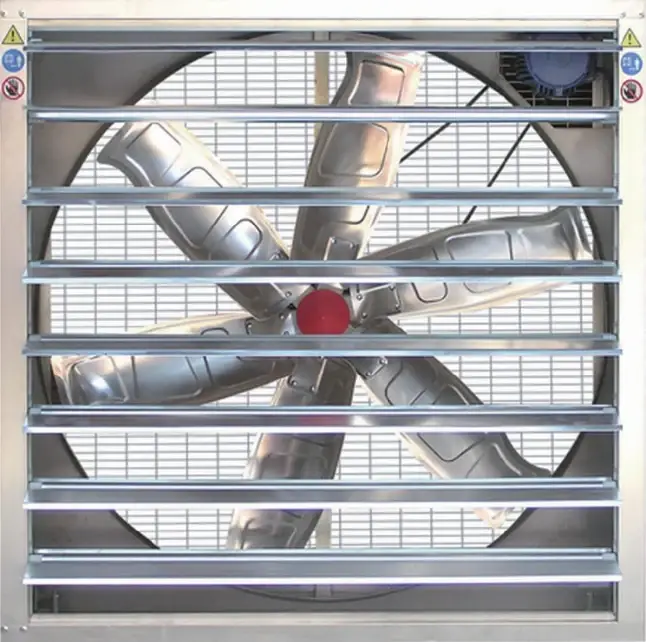
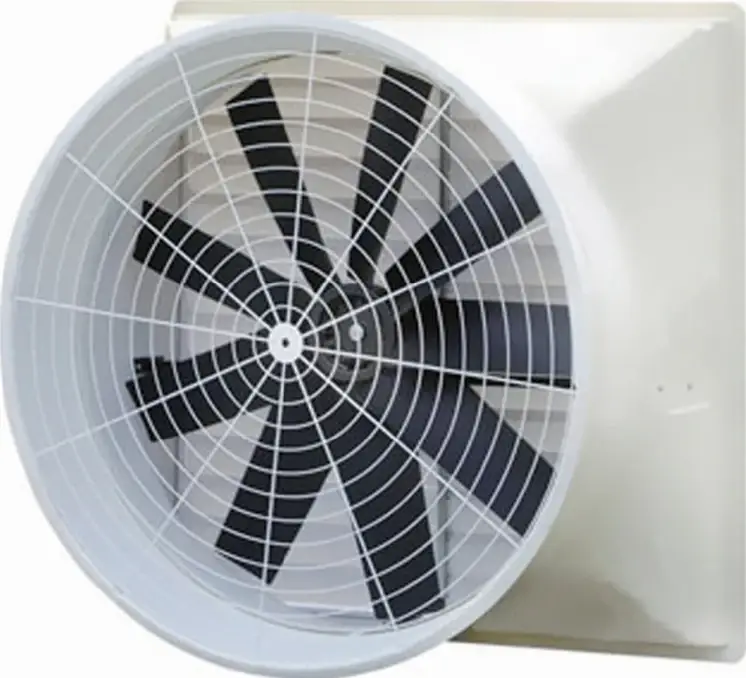
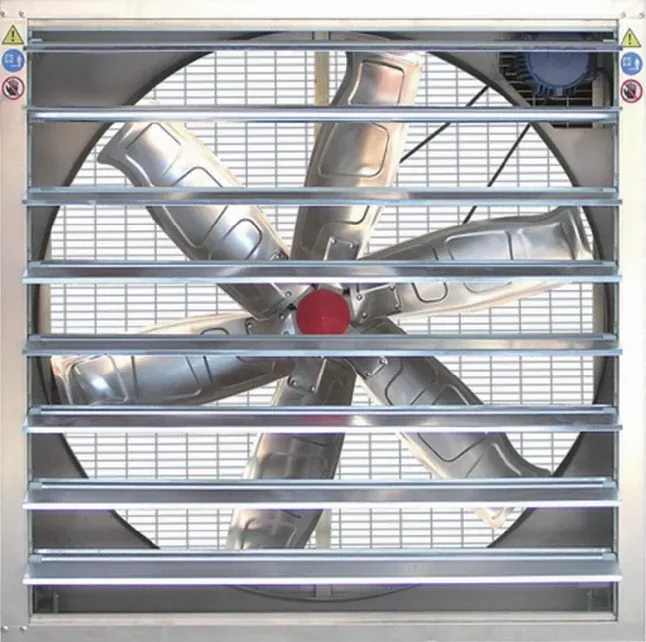
Enough fan capacity at one end. Our drop hammer fans cover 22,000 to 52,000 m³/h across six sizes from 30 to 55 inch; butterfly cone fans reach 51,020 m³/h at 70 dB or below; and the DJF shutter cone fan uses a push-pull opening system. How many you need comes from your house volume — the method is in choosing an exhaust fan.
A sealed house. This is the part people skip. If air can get in through gaps along the length of the building, it will — because that is easier than travelling from the far end. The fans then move plenty of air without moving it over the birds. Before buying another fan, walk the house at night with the fans running and look for light coming through gaps.
An inlet big enough at the tunnel end. Air has to get in as fast as the fans take it out. Too small an opening and the fans fight the house instead of moving air.
Somewhere for the air to go over the birds. In a cage house, tier layout affects the path. Air that runs down an empty aisle above the birds cools nobody.
Adding evaporative cooling
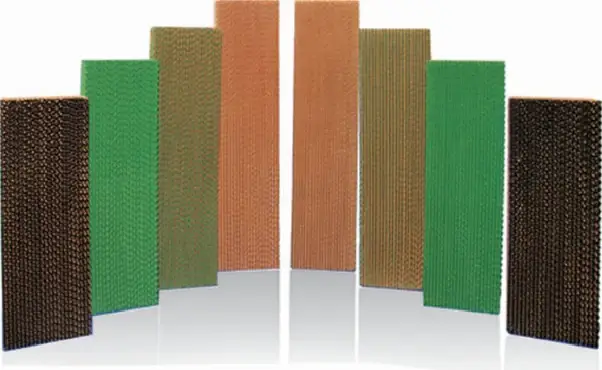
Once air is moving, cooling pads at the inlet end lower the temperature of the air coming in. Pads come second, never first — the full reasoning, including the honest limit in high humidity, is in keeping a house cool through a Bangladeshi summer.
Common mistakes
- Running tunnel mode on small birds. Air speed that comforts a heavy broiler chills a young one. Age matters as much as temperature.
- Leaving side inlets open in tunnel mode. Air takes the short route and the far end of the house stays hot.
- Dirty shutters and blades. A neglected fan bank can lose a serious share of its rated air volume, quietly, over a season.
- Sizing for an average day. Size for the worst afternoon you expect, then run fewer fans the rest of the time.
- Forgetting the power. Every fan stops together in a cut — see keeping a closed house alive without the grid.
In the monsoon
Tunnel ventilation still works when the air is humid, because air speed cools the bird directly. What changes is evaporative cooling: the wetter the air, the less a pad can do. In a humid spell, lean on air movement and keep the pads on short cycles or off.
Send us your house length, width and height, whether it is curtain-sided or closed, and your bird numbers, and we will come back with a fan count, inlet layout and the tunnel opening the building needs.