
Load shedding: keeping a closed poultry house alive without the grid
A closed house has no passive cooling. Which circuits must stay up, how to size a generator from your own fan ratings, and the manual fallback to keep.
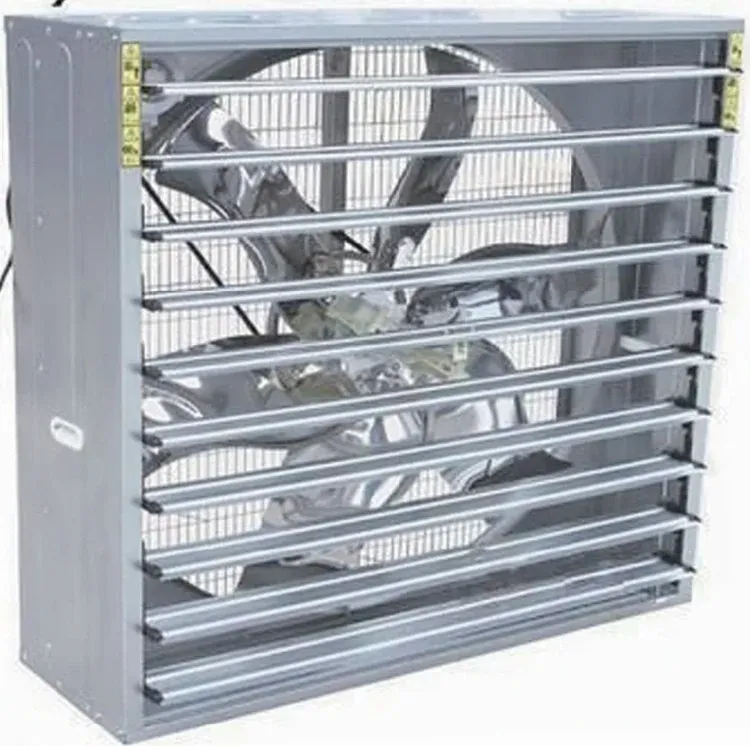
An open, curtain-sided house loses power and keeps breathing. A closed house loses power and stops breathing. That is the trade you make when you build a controlled-environment house, and it has to be answered with equipment, not optimism.
On a still, hot afternoon the inside of a sealed house with no fans becomes dangerous quickly. Not in hours — in minutes to tens of minutes, depending on bird size, stocking and outside conditions. Every plan below exists because of how short that window is.
Decide your priority circuits now
Write this list and put it on the wall by the changeover panel, in order:
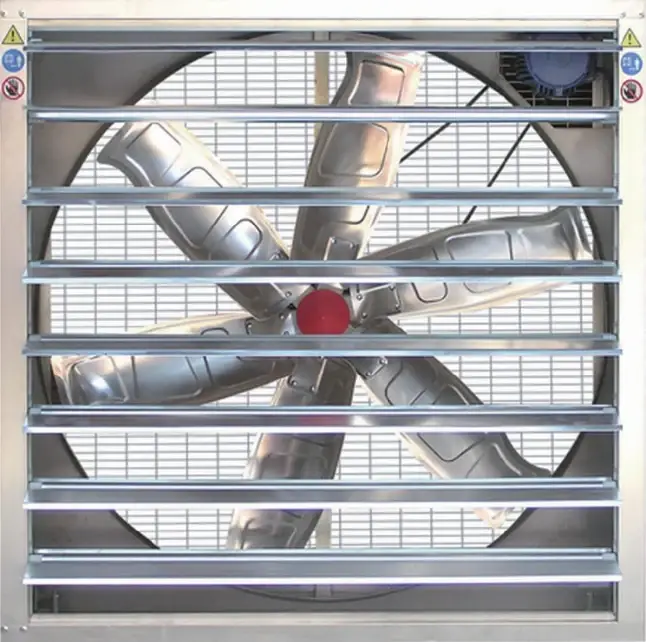
- Ventilation fans. First, always. Air is the only thing the birds cannot do without for even a short time.
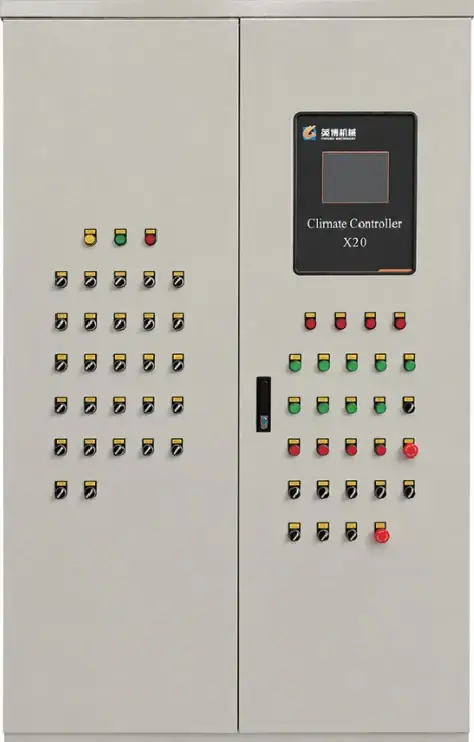
- The controller. Fans without control are better than nothing, but not by much.
- Water pump or pressure, if your line depends on pumped supply.
- Feeding line. It can wait an hour. Birds cannot wait for air.
- Lighting. Last. A dark house is calm; a hot house is not.
Knowing the order before an outage is what stops somebody restoring the feed line first while the fan bank sits idle.
Sizing a generator from your own numbers
You can do the arithmetic from the fan ratings themselves:
- List every fan you would need running in the worst conditions, with its motor rating. Our drop hammer fans run from 0.75 KW on the smaller sizes to 1.5 KW on the 55 inch, and the cone fans are 0.75 KW.
- Add them up, then add the controller, pumps and anything else on your essential list.
- Allow for starting current. Motors draw far more at start-up than while running, so the generator has to carry the surge, not just the total.
- Stagger the starts if your controller allows it, so the fans do not all try to start at once.
- Add headroom. A generator running flat out at its limit in a Bangladeshi May is a generator that will trip.
Have an electrician confirm the figure. This is the one calculation where being roughly right is not good enough.
Automatic changeover, not a person with a key
Manual changeover assumes somebody is on the farm, awake, and fast. Automatic transfer switching costs money once; a batch lost at two in the morning costs more. Pair it with an alarm on the environment controller that reaches a phone that is switched on at night — and test it, properly, by actually cutting the supply.
Run the generator under load monthly. A generator that has not been started since last season is a decoration.
Keep a manual fallback
Even in a modern closed house, keep a way to open it by hand — drop curtains, a manual override on the air inlets, doors at both ends that can be opened wide. When the generator does not start, opening the house is the only thing standing between you and the loss of the flock.
Make sure the people on site know how, in the dark, without instructions. Walk them through it before the season.
Two things that keep working without power
Not everything stops:
- The Dosatron medicator in the nipple drinking system runs on water pressure alone, no electricity, so a treatment programme continues through a cut as long as water is flowing.
- Gravity-fed water from a header tank, if your system is arranged for it. Worth checking that it is.
The drill
Once, before the hot season:
- Cut the mains deliberately, in daylight, with the flock in.
- Time how long the changeover takes and what starts.
- Check the alarm fires and reaches the right phone.
- Have somebody open the manual fallback while you watch the clock.
- Write down what went wrong, and fix it that week.
Every farm that has done this has found something. It is far better to find it on a Tuesday morning of your choosing.
Tell us your fan bank and house size and we will help you work out the essential load, so your electrician is sizing to a real number.