
Breeder farm equipment: feeding, nests and floors that protect fertility
A breeder house is judged on uniformity, fertility and hatching eggs. The equipment that decides those three, and why chain feeding matters so much.
A broiler house is judged on weight and feed conversion. A breeder house is judged on uniformity, fertility and the number of clean hatching eggs it sends out. Those are different targets, and they need different equipment — starting with how the birds are fed.
Feeding: everybody eats at once, or nobody is uniform
Breeders are fed a restricted ration. That means the feed goes in, the birds compete for it, and the birds that reach it late get less. Do that for a few weeks and the flock splits into birds that are over target and birds that are under, and a split flock lays badly.
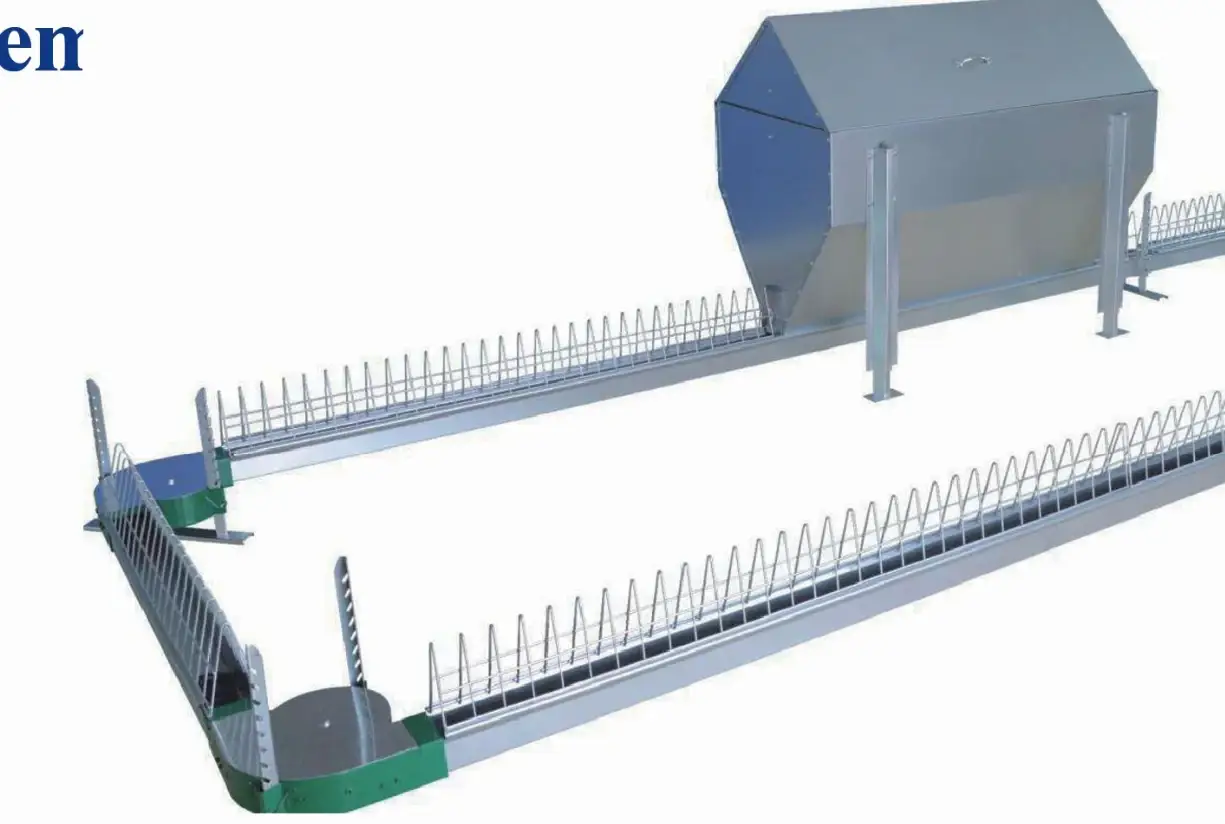
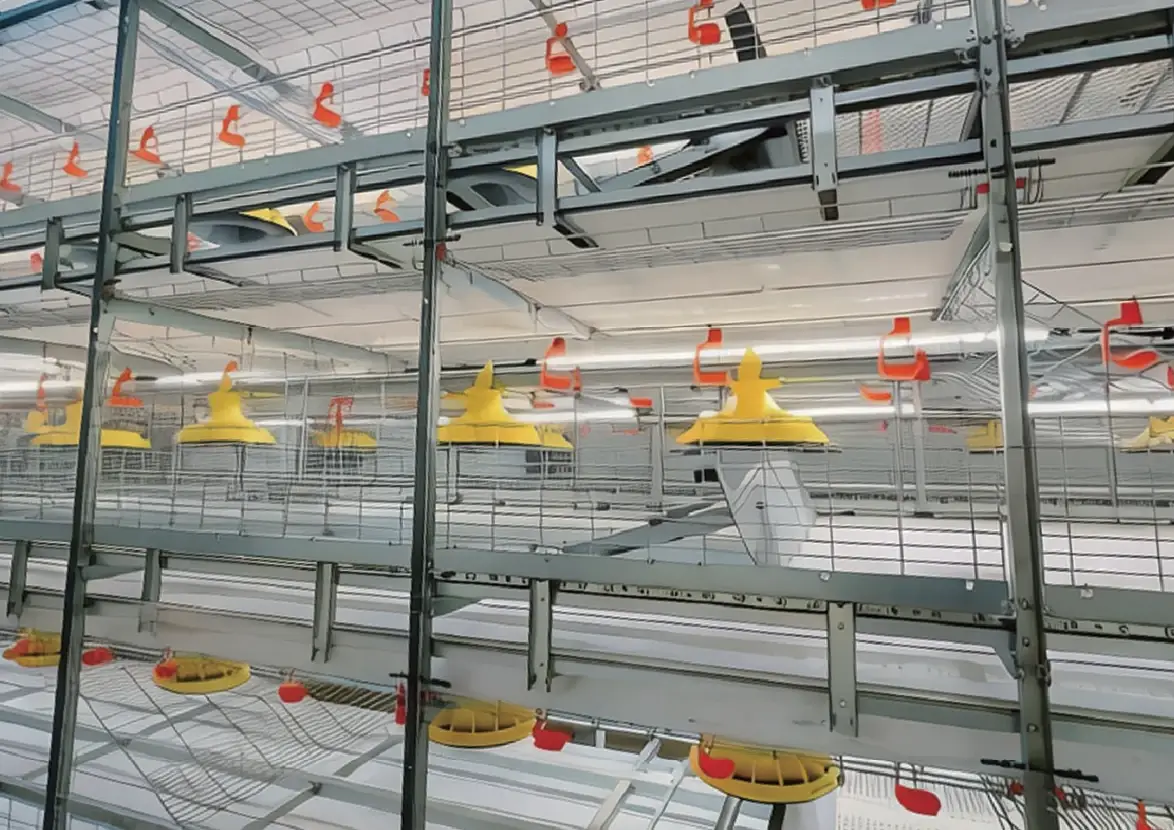
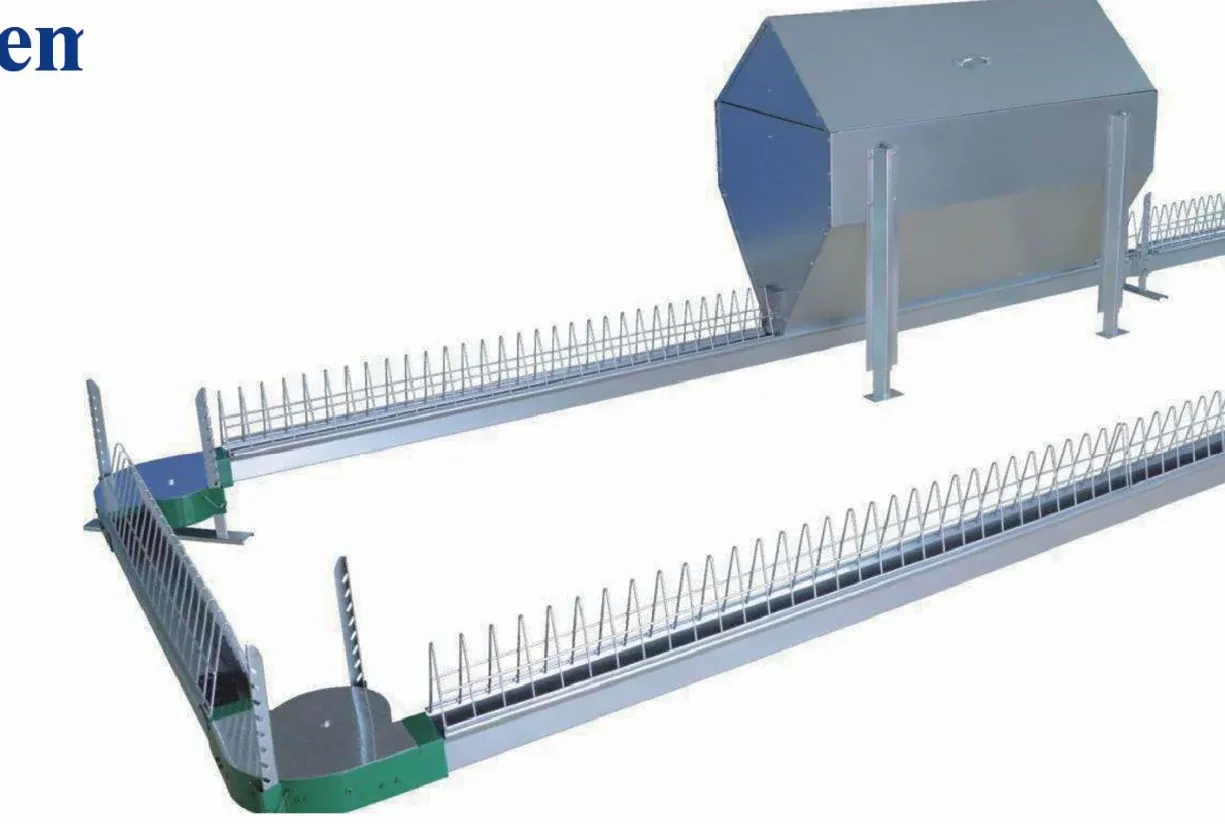
The breeder feeding system is a chain line built to remove that competition: every feed pan fills at the same moment, so the whole flock starts eating together. The catalogue is direct about the result — it eliminates the stress reaction around feeding, promotes balanced growth and supports a higher laying rate.
Two other things the chain design does: the plastic disc delivery breaks less feed than an auger, so the ration in the trough is still the ration you mixed, and the enclosed run is quieter and easier on the pipe.
Nests: where your hatching eggs are made or lost
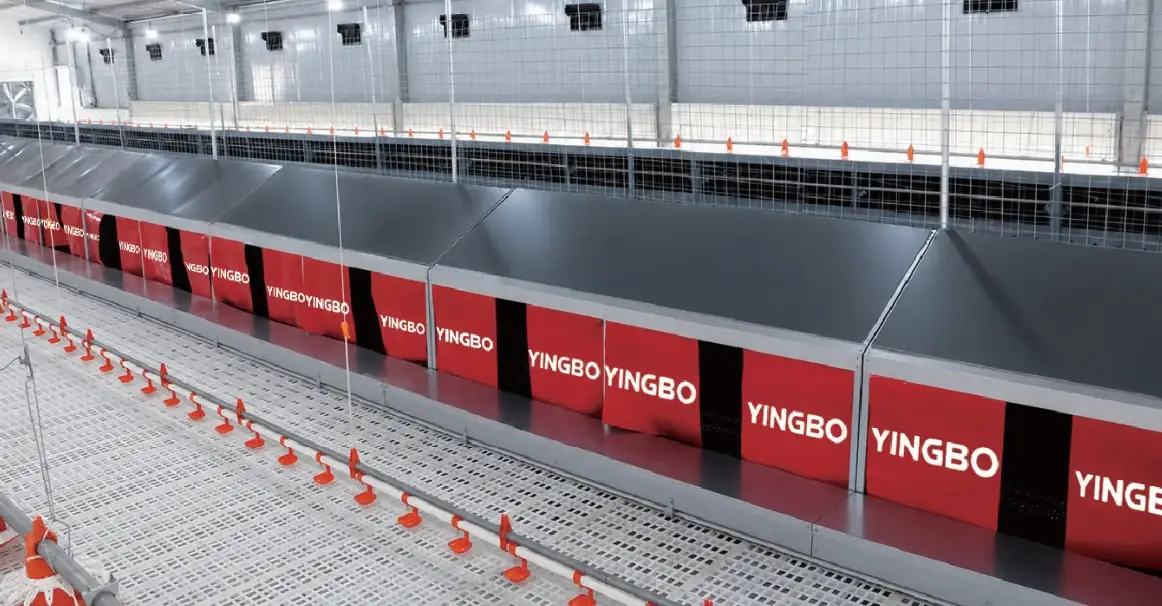
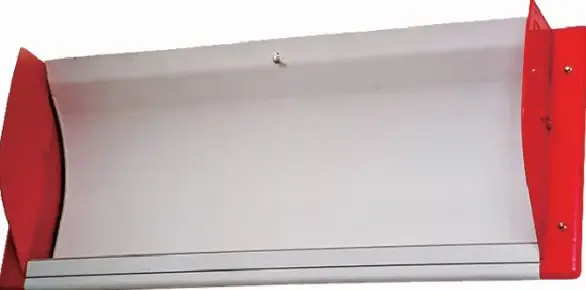
Eggs laid on the floor are dirty, more often cracked, and worse for hatchability. The automatic laying nest moves eggs from hen to collection table on a belt: a short egg-roll distance to protect quality, a gentle rear slope so eggs roll rather than drop, a separate box floor so no egg is left behind, and a structure with no crevices, which is what makes mite control workable.
The detail on training birds, nest lighting and floor eggs is in automatic laying nests.
Floors: slats where the work happens
Most breeder houses run a raised slat area with the nests and drinkers, and a litter area for scratching and mating. Plastic slat panels come in four sizes — 1 m by 0.5 m through to 1.2 m by 0.6 m — in raw plastic with leak holes sized to protect feet. Droppings fall away from the birds, the area around the nests stays dry, and the panels wash down between flocks.
Keep the litter area genuinely usable: mating happens on litter, and wet or capped litter reduces fertility as surely as any equipment fault.
Water
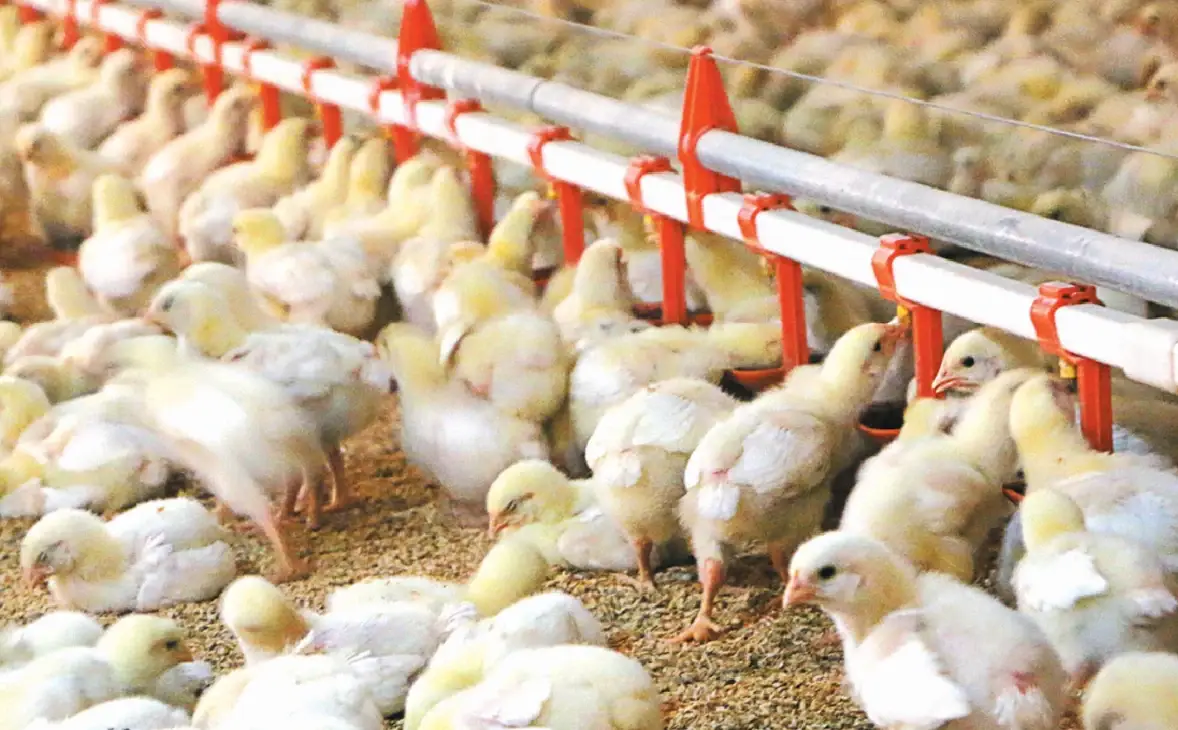
Breeders need the same closed nipple line as anyone else — filter, meter, doser, regulator, nipples with drip cups — for the same reasons: dry floors, clean water, and a medication route that works without electricity. Set the height for the bird in front of you and check it as the flock matures; hens and cocks are different sizes, which is exactly why line height gets neglected in breeder houses.
Light and climate
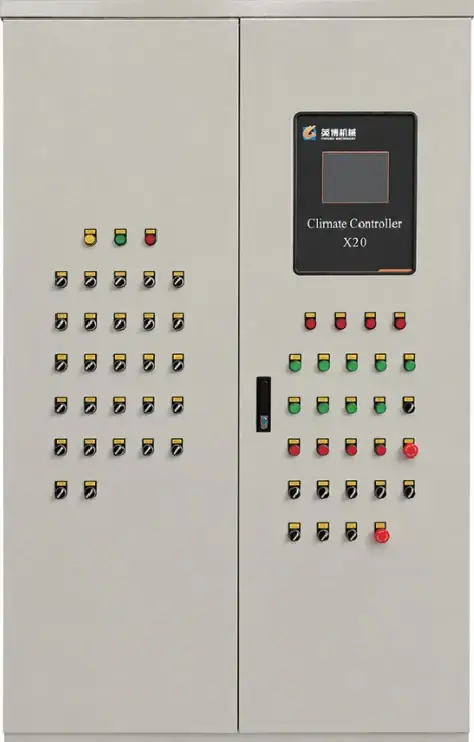
Light drives sexual maturity and lay, so the light programme has to be run precisely and the house has to be dark when the programme says dark. That is a job for the environment controller and for light-tight fans and inlets — see light management for layers, which applies equally here.
What to have ready before asking for a quote
- House dimensions, and the litter-to-slat split you plan.
- Bird numbers, hens and cocks.
- Whether you are rearing or buying pullets.
- Where the egg room will be and the route to it.
- Power supply and backup.
With those we can specify the feed line, nest line, slats, water and control as one house rather than as five separate orders — which is the only way the parts end up fitting each other.