
Automatic laying nests: fewer floor eggs, cleaner eggs, less walking
Floor eggs are dirty eggs, and collecting them is a full-time job. How a belt-fed nest line changes egg quality, labour and mite control in a breeder house.
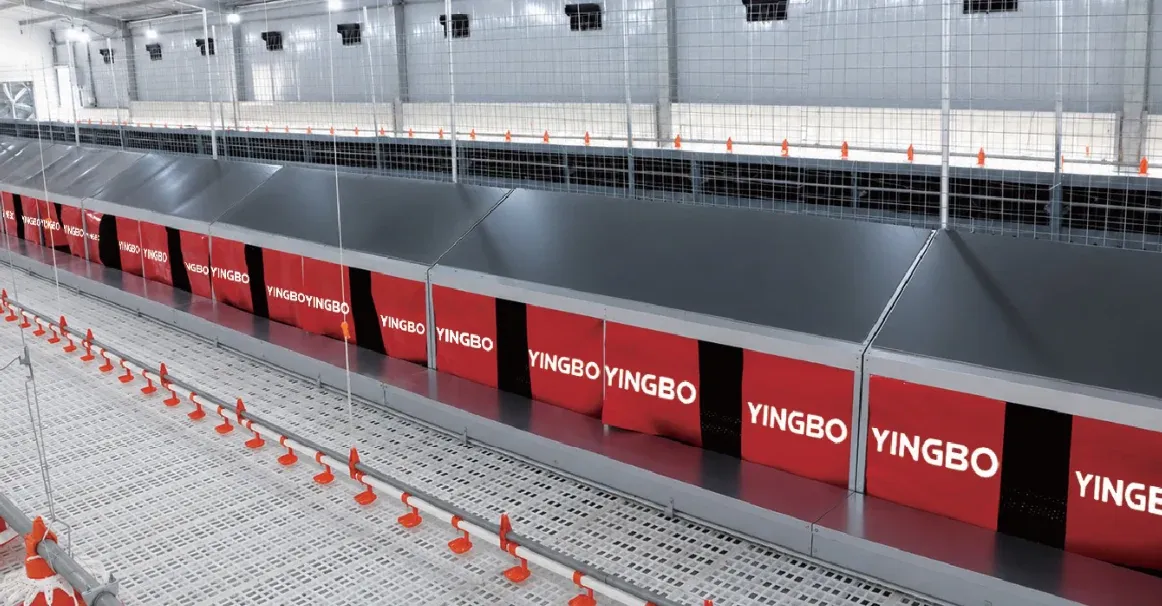
Every egg laid on the floor is worth less than the same egg laid in a nest. It is dirtier, it is more likely to be cracked, it takes a person’s time to collect, and in a breeder flock it is a hatchability problem as well as a hygiene one. A nest line exists to move eggs from the hen to the collection table without a hand touching them.
What the nest is designed to do
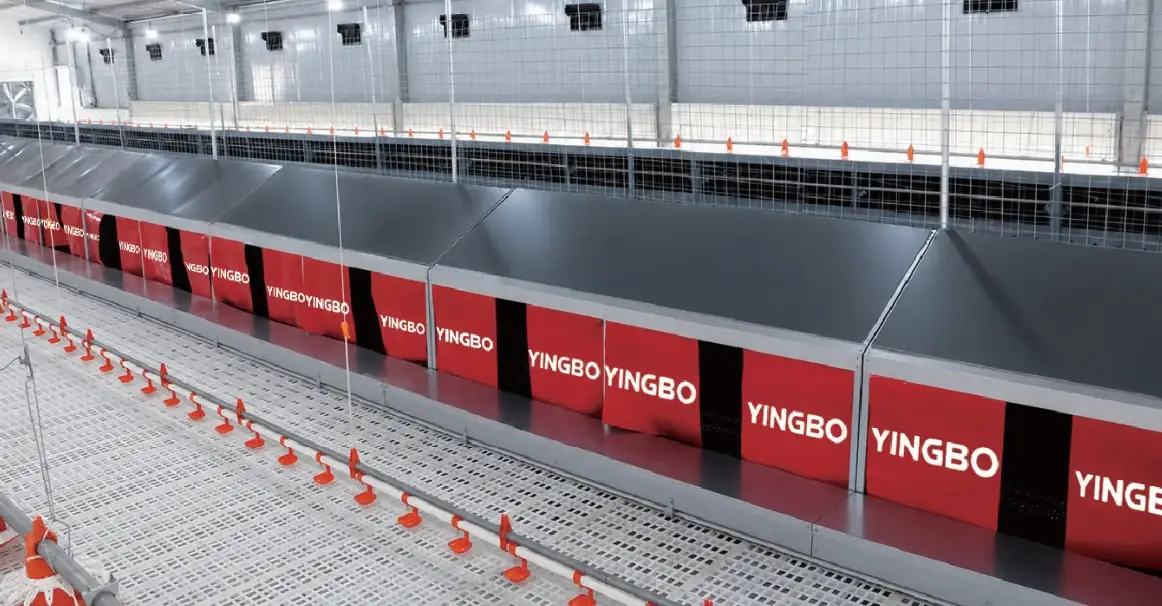
The automatic laying nest is built around the egg’s short journey out of the box:
- A short egg-roll distance, which preserves egg quality and cuts breakage and removal rates. The less distance an egg travels, the less it can go wrong.
- A gentle slope at the rear of the laying box, so eggs roll onto the conveyor rather than drop onto it.
- A separate egg-box floor, so every remaining egg has rolled out before the box closes. No eggs left behind to be trodden on overnight.
- Hens sit with chests out of the nest box while laying, which removes the risk of birds pecking each other from behind — a real cause of damage and downgrades in a busy nest row.
- A box that stays clean through the production cycle, which is what actually reduces the dirty-egg rate.
- No gaps or crevices in the structure, so mite control is effective. Anyone who has fought red mite in a wooden nest knows what this is worth.
Floor eggs are a management problem too
Equipment reduces floor eggs; it does not eliminate them on its own. What else helps:
- Train the birds early. Open the nests before the first eggs are expected so hens learn where to go.
- Light the nests correctly. Hens avoid bright nests and lay in dark corners. If a corner of your house is darker than the nest, that corner becomes the nest.
- Walk the house often in the first weeks of lay and lift floor-laying birds into the nests.
- Close the nests at night so birds do not roost and foul them.
- Remove the alternatives. Dark, quiet floor spaces behind equipment will be found and used.
Nests, slats and floor layout
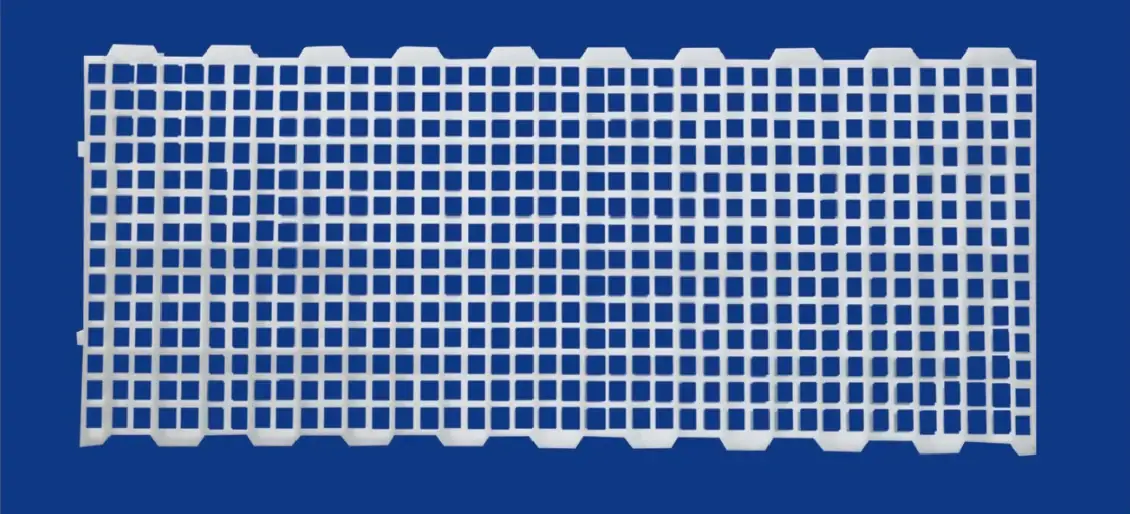
Most breeder houses combine a litter area with a raised slat area, with the nests set in the slat section. Plastic slat flooring is what that raised area is usually built from: 100% raw plastic in four panel sizes, with leak holes sized so droppings pass through without injuring feet, easy to wash and slow to age.
Droppings fall through the slats and out of the birds’ way, which keeps the area around the nests dry — and dry is what keeps eggs clean. There is more on the trade-off in plastic slat floor or deep litter.
Feeding and nests belong to the same plan
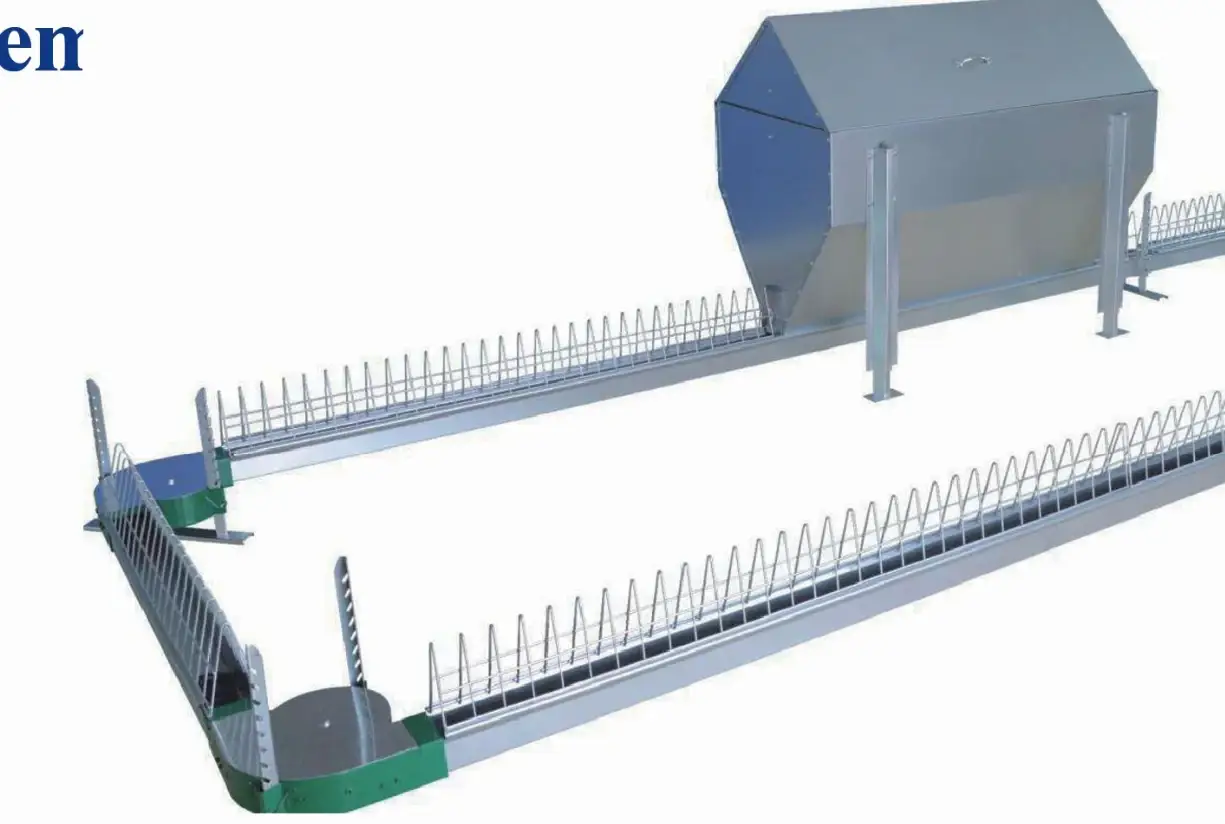
Breeders are fed on a restricted programme, and how they eat affects when and where they lay. The breeder feeding system fills every pan at the same moment so the whole flock eats together, which removes the rush and scramble around feeding. A calmer house at feeding time means fewer eggs laid in a panic on the floor.
Before you order a nest line
Have these ready:
- House length and the layout you are working with — single or double row, litter-to-slat ratio.
- Bird numbers, so the nest count matches the flock.
- Where the collection table will sit, and whether there is a clean route out of the bird area to the egg room.
- Power, since the belt runs on it.
Send those over and we will lay out the nest line, the belt run and the collection point together, rather than quoting a nest count on its own.