
Starting a small hatchery in Bangladesh: the questions to settle first
Rooms, airflow, power and water decide a hatchery result as much as the incubator does. What to plan before you buy a machine for a small hatchery.
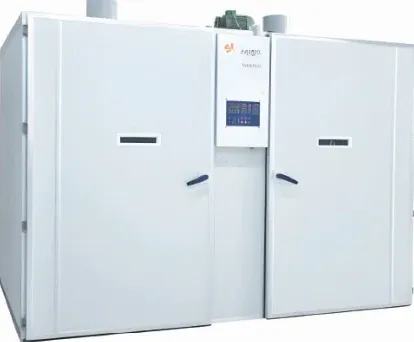
People buy the incubator first and design the building around it. It is the wrong way round. An incubator holds temperature to a tenth of a degree, but if the room around it is hot, dusty, or shares air with the chick room, your hatch and your chick quality will not show it.
Settle these before you order a machine.
1. Rooms, and the direction things move
A hatchery works as a one-way street. Eggs come in dirty from the farm and chicks leave clean; the two must never meet.
- Egg receiving and store — cool, steady, away from the setter’s heat.
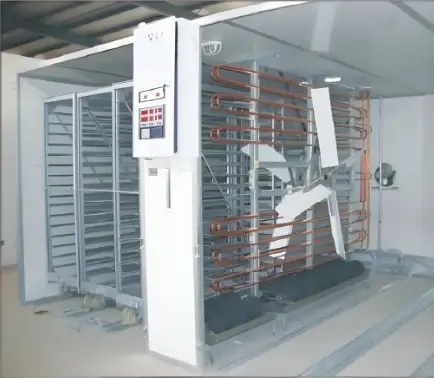
- Setter room — the incubators, with space to work around them.
- Hatcher room — separate. Hatching produces dust and fluff, which is the last thing a setter room needs.
- Chick handling room — clean end, with its own door to the outside for dispatch.
- Wash area — with a drain, and room to actually clean trolleys and trays.
Air, people and trolleys should all move from clean to dirty and never back. If your building forces a trolley of hatching chicks back through the setter room, the layout will cost you eventually.
2. Power, before anything
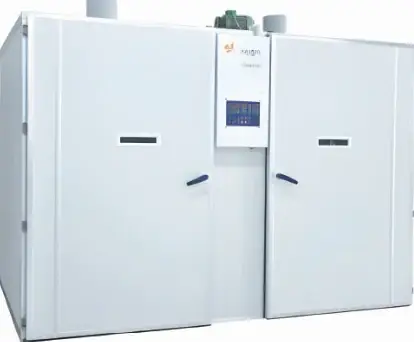
This is the question that decides whether a hatchery is viable on your site. Both machines run on mains — the single-stage incubator on AC 380 V or 220 V, 50 Hz — and an incubator that loses power loses a batch, not a morning.
- Size a generator for the whole hatchery load, not one machine.
- Fit automatic changeover. A batch does not wait for somebody to reach the switch.
- Set alarms that reach a phone, and test them.
- Keep fuel for longer than you think you need.
Plan this with the same seriousness as keeping a poultry house alive without the grid — in a hatchery the margin is thinner.
3. Water and humidity
Incubators control humidity by adding water to the air, so water quality becomes air quality. The box-type incubator works over a 40 to 70% RH range, and hard or dirty water leaves scale and deposits in the humidification system that end up as a maintenance problem and a drift in control.
Filter the supply, keep a tank so a supply interruption does not stop a batch, and clean the humidification parts on a schedule rather than on symptoms.
4. Room climate around the machine
The incubator fights the room it stands in. A setter room that reaches 35°C in the afternoon makes the machine work at its limit all day, and the batch feels it. Give the room its own ventilation and shading, keep the machines off a wall that takes the afternoon sun, and leave clearance for airflow around each cabinet.
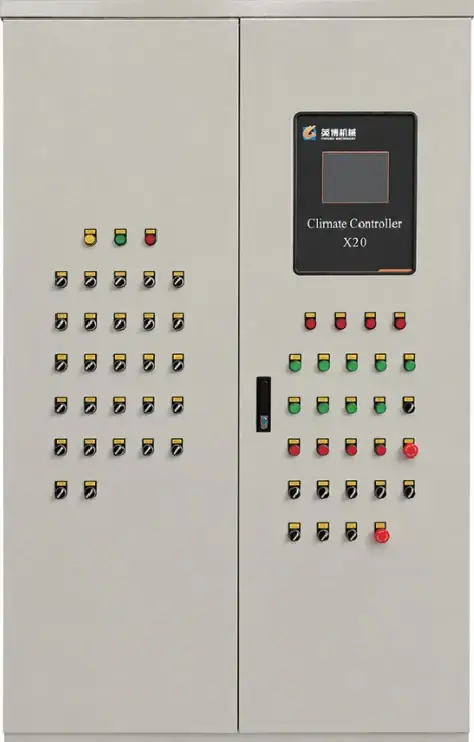
An environment controller is as useful on a hatchery room as on a bird house — real-time monitoring from a phone means you know about a hot room before the batch does.
5. Hygiene you can actually carry out
Hatcheries fail on hygiene more often than on technology. Plan for it physically: washable surfaces, floor drainage, a trolley wash point, somewhere to store clean trays away from dirty ones, and footbaths at every threshold that people will actually step in.
Single-stage loading gives you a full clean-down between batches, which is a real advantage where hygiene has been a problem — the comparison is in box-type or single-stage. The general discipline is the same one described in cleaning between batches.
6. Capacity that matches your egg supply
Machine capacity should follow your reliable weekly egg volume, not your ambition. A half-empty setter costs the same to run as a full one. Work out what you can collect in one setting, then choose the capacity that fills.
What to send us
Weekly egg volume, species, the rooms you have or plan, your power supply and generator, and your water source. We will tell you which machines fit, what the rooms have to provide, and where your building will fight you.