
Nipple drinkers or bell drinkers? What wet litter really costs you
A closed water line puts water in the bird, not on the floor. What a full system contains, how to set height and pressure, and how to survive hard water.
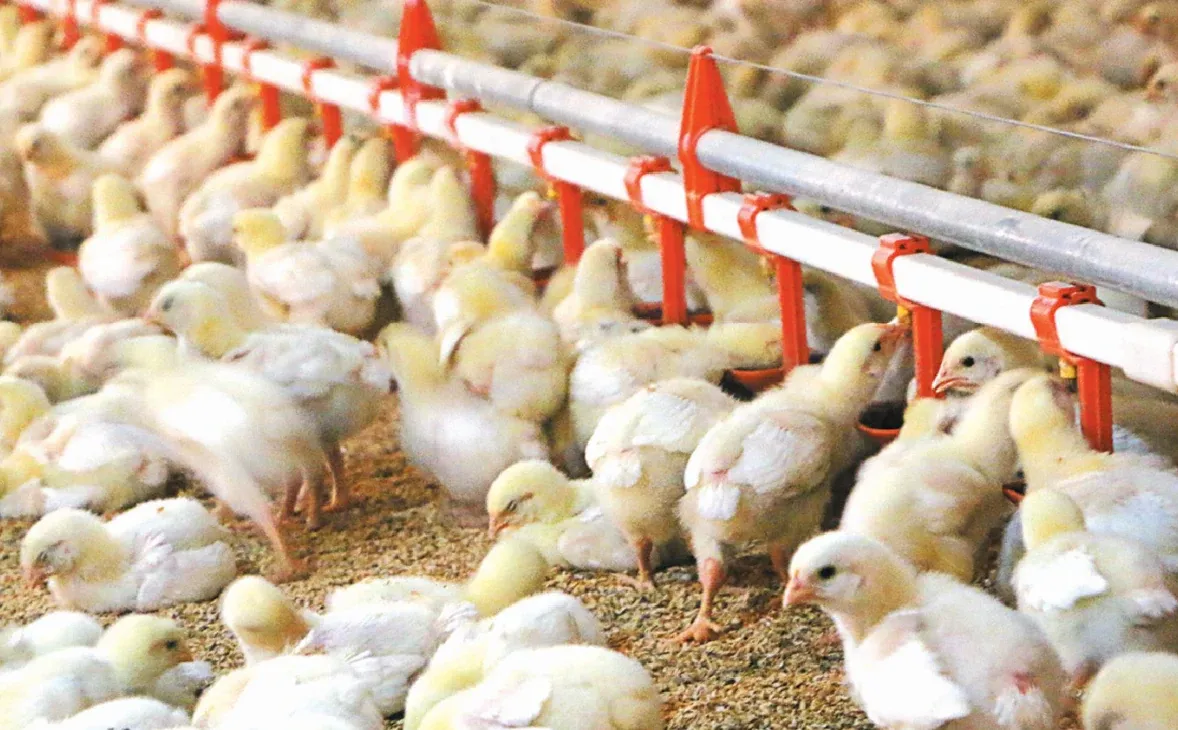
Every litre of water that misses the bird lands in the litter. Wet litter gives off ammonia, ammonia burns eyes and airways, damp bedding brings footpad lesions, and the whole batch performs worse while somebody spends the day spreading dry bedding. That is the real cost of an open drinker, and it is why closed nipple lines have replaced bell drinkers in most serious houses.
What a complete drinking line contains
An automatic nipple drinking system is a chain from the mains to the beak, and every part earns its place:
- Filter — takes sediment out before it reaches anything with a moving seal.
- Water meter — tells you daily intake. A drop in water intake is often the first sign of trouble in a house, ahead of feed intake and well ahead of mortality.
- Doser — a Dosatron medicator, driven by water pressure with no electricity at all. On a farm with load shedding that matters: your medication programme does not stop when the grid does.
- Pressure regulator — holds the water level steady along the line, with a transparent indicator tube so you can see the level rather than guess it, and it comes apart easily for cleaning.
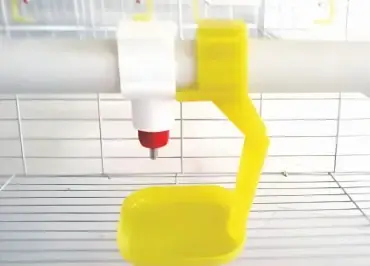
- Nipples — plastic outside, stainless steel inside, sized to release water when a bird works them and to stop when it does not.
- Drip cups — catch what escapes the nipple before it reaches the floor.
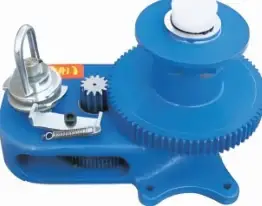
- Hanging system — winch, pulley, S-hook and steel wire, rated to lift up to 680 kg, so the whole line rises and falls together.
Height and pressure decide everything
Two settings do most of the work, and both change as the birds grow.
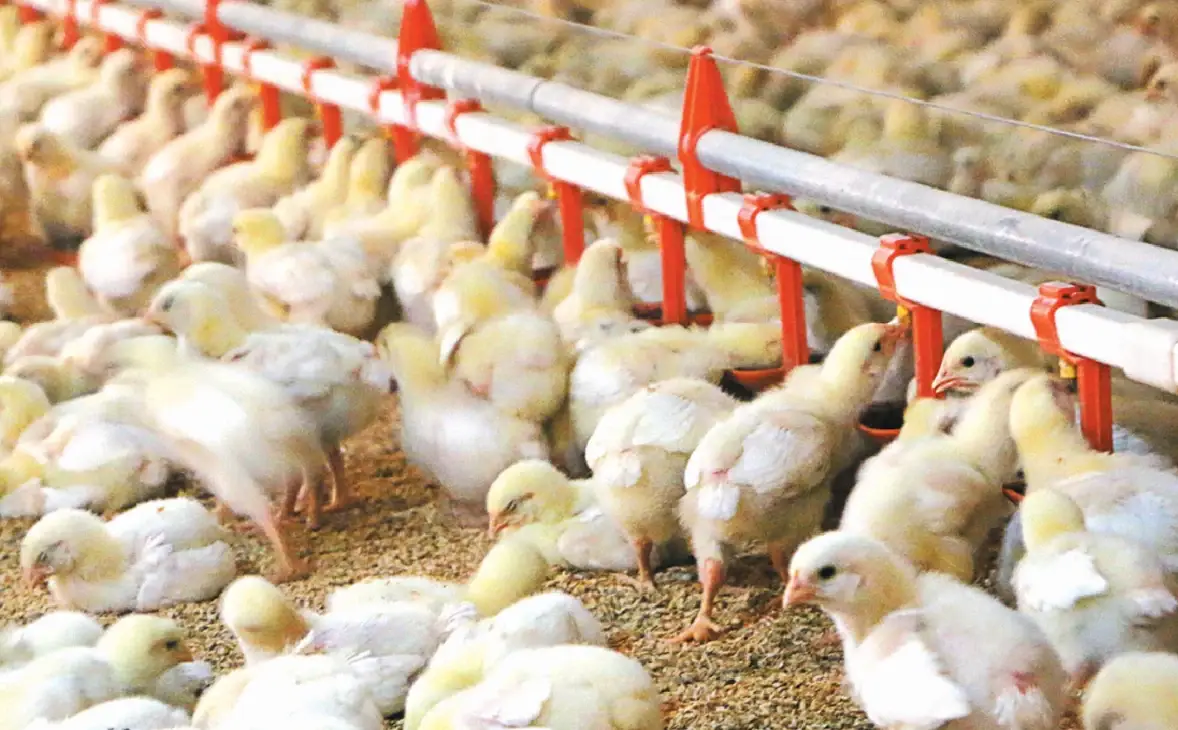
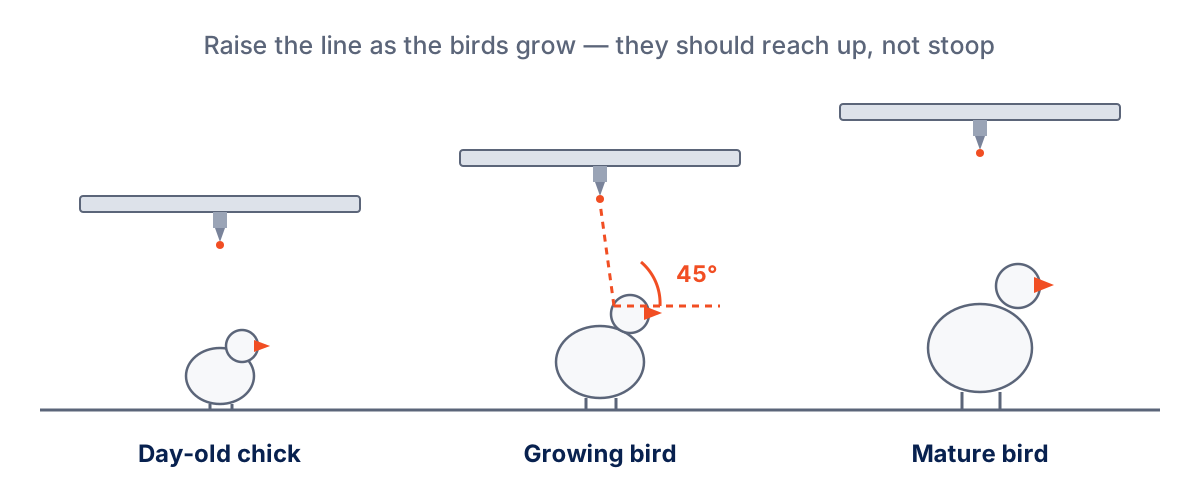
Height. For day-old chicks the nipple sits at about eye level, so a chick drinks without stretching. As the birds grow, raise the line so the bird reaches slightly up and holds its head at roughly 45 degrees. Too low and birds knock water out with their bodies. Too high and the smallest birds stop drinking enough, which shows up as uneven weights before it shows up anywhere else.
Pressure. High enough to refill a nipple quickly, low enough that it does not spray when triggered. Set it at the regulator, then walk the line and watch real birds drink. The indicator tube tells you the level; the birds tell you whether it is right.
Check both weekly, and always the morning after birds have been moved or a line has been lifted for cleaning.
Hard water, and what it does to a line
Much of Bangladesh runs on tube-well water with a heavy mineral load, and iron and calcium are what kill nipple lines. Scale builds inside the nipple, the seal stops sealing, and the nipple either blocks or drips without stopping.
What helps:
- A filter at the head of the line, cleaned on a schedule — not when somebody notices. Filters, regulators and tanks are consumable parts: keep spares of the fittings your house runs on.
- Flushing between batches at full pressure, with the line dropped and the end open.
- Descaling with a suitable product where your water is hard, following the instructions, always on an empty house.
- Watching the meter. A partly blocked line shows as falling intake before you can see anything wrong at the nipple itself.
Cleaning between batches
Water lines grow biofilm — a slippery layer inside the pipe that shelters bacteria and blunts whatever you dose through the line later. Between batches, lift the lines clear on the winch and pulley system, flush, clean and let them dry. A line you can raise out of the way is a line that actually gets cleaned, which is the quiet argument for a proper hanging system.
When a bell drinker still makes sense
Small flocks, backyard sheds, and brooding setups where somebody is refilling by hand anyway. Once you are running a house of any size, the labour of filling and cleaning open drinkers — plus what the wet litter costs you in performance — outruns the price of a closed line quickly.
Not sure what your house needs? Send us the house length, the number of rows and your bird numbers, and we will specify the line as one system: filter, doser, regulator, nipple spacing and hanging.