
Broiler cages or floor rearing: what changes when birds come off the litter
Cages put more broilers in the same shed and take the litter problem away, but they demand more of your ventilation and power. An honest comparison.
The short answer: cages let you raise far more birds in the shed you already have, and they get the manure out from under the flock every day. What you give up is simplicity. A cage house needs steady power, planned ventilation and a manager who watches the birds tier by tier. If your shed is low, your power is unreliable and nobody is available at night, the floor is still the safer choice.
What actually changes
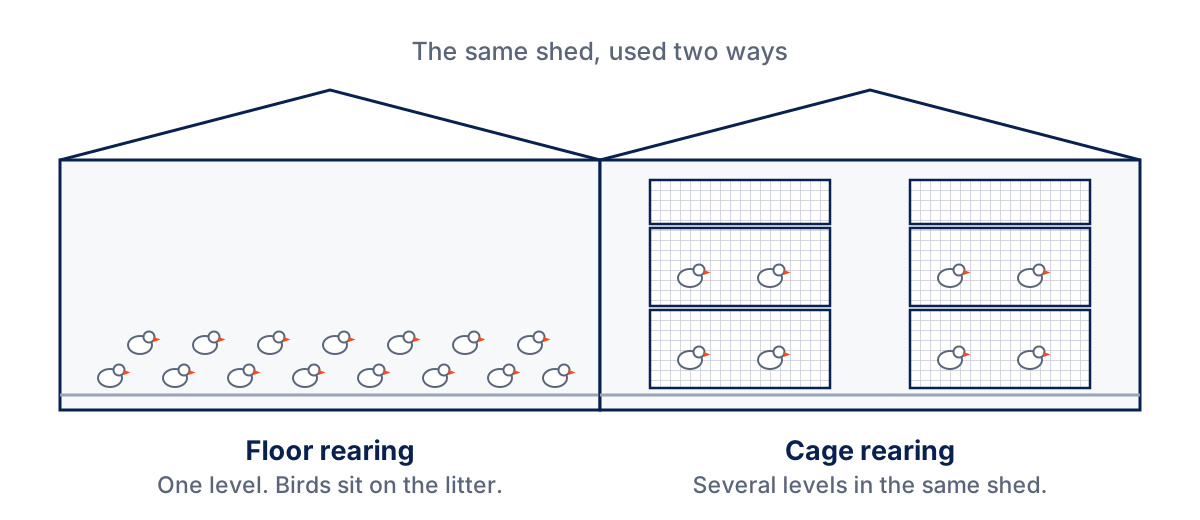
On the floor, the birds sit on their own litter for the whole batch. Everything that goes wrong in a broiler house — wet litter, ammonia, footpad burn, coccidiosis pressure — starts there. You manage it by adding fresh litter, by ventilating hard, and by accepting a certain loss.
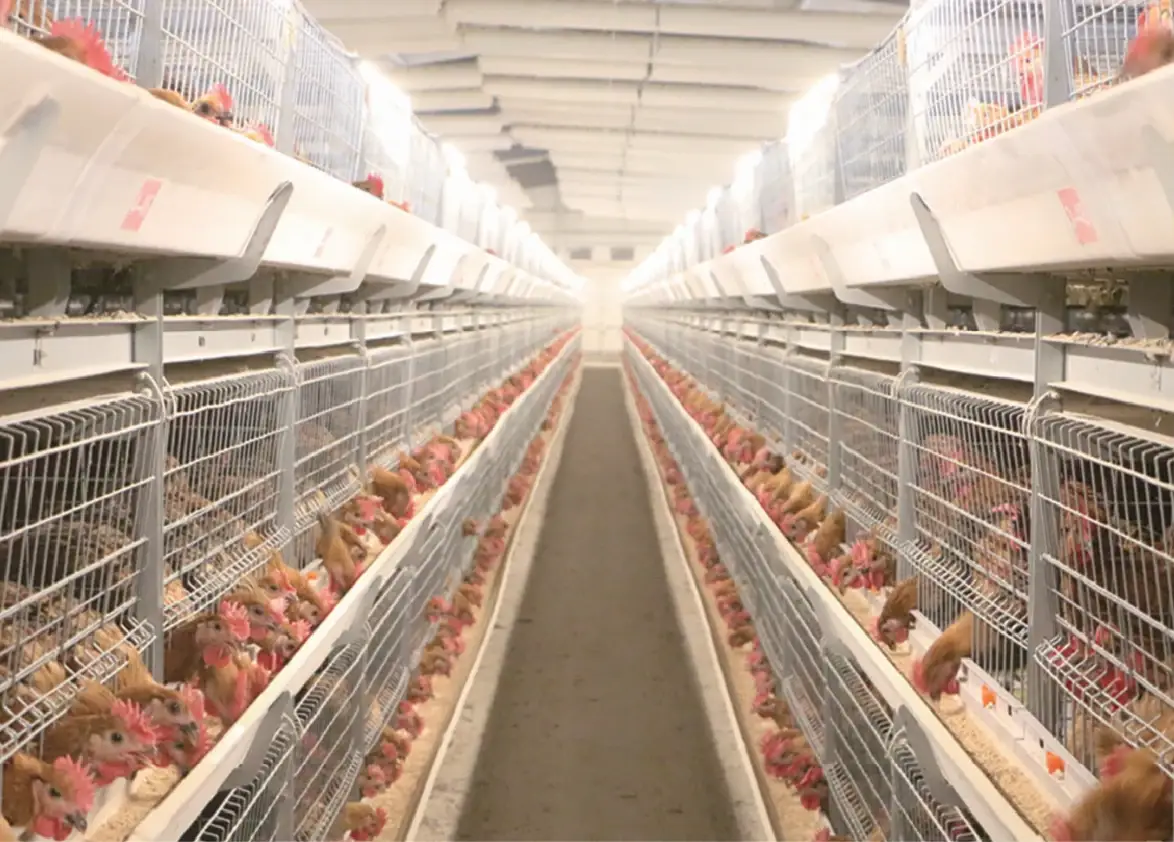
In a cage, the bird stands on mesh and the droppings fall away from it. Manure lands on a belt or a board underneath and leaves the house. The air the bird breathes at bird level gets cleaner, and the daily job changes from turning litter to running a belt.
Three other things change with it:
- Birds per shed. Tiers multiply your floor area. The same building holds several levels of birds instead of one.
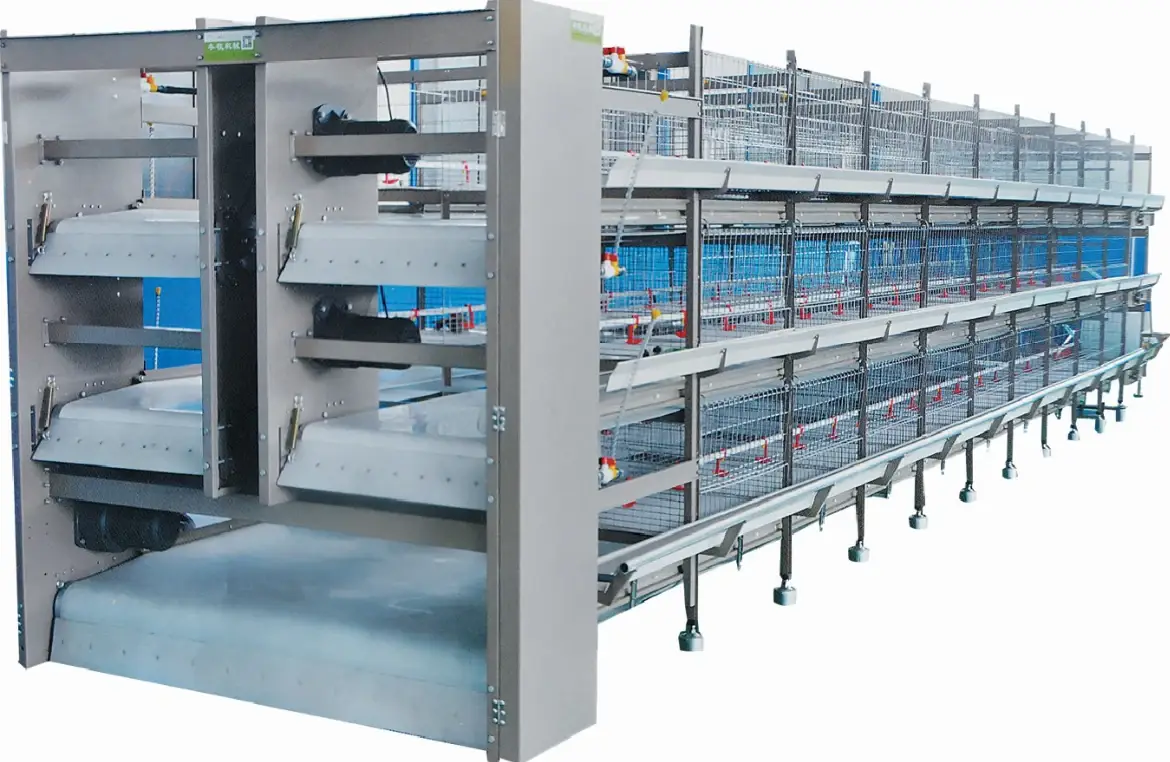
- Catching. Floor catching is a night of hard labour. In cage houses the birds come out tier by tier, and in an automatic system they come out on a conveyor.
- Cleaning between batches. Mesh and galvanised steel wash down. Litter has to be removed, and the shed has to dry.
The three cage systems we supply
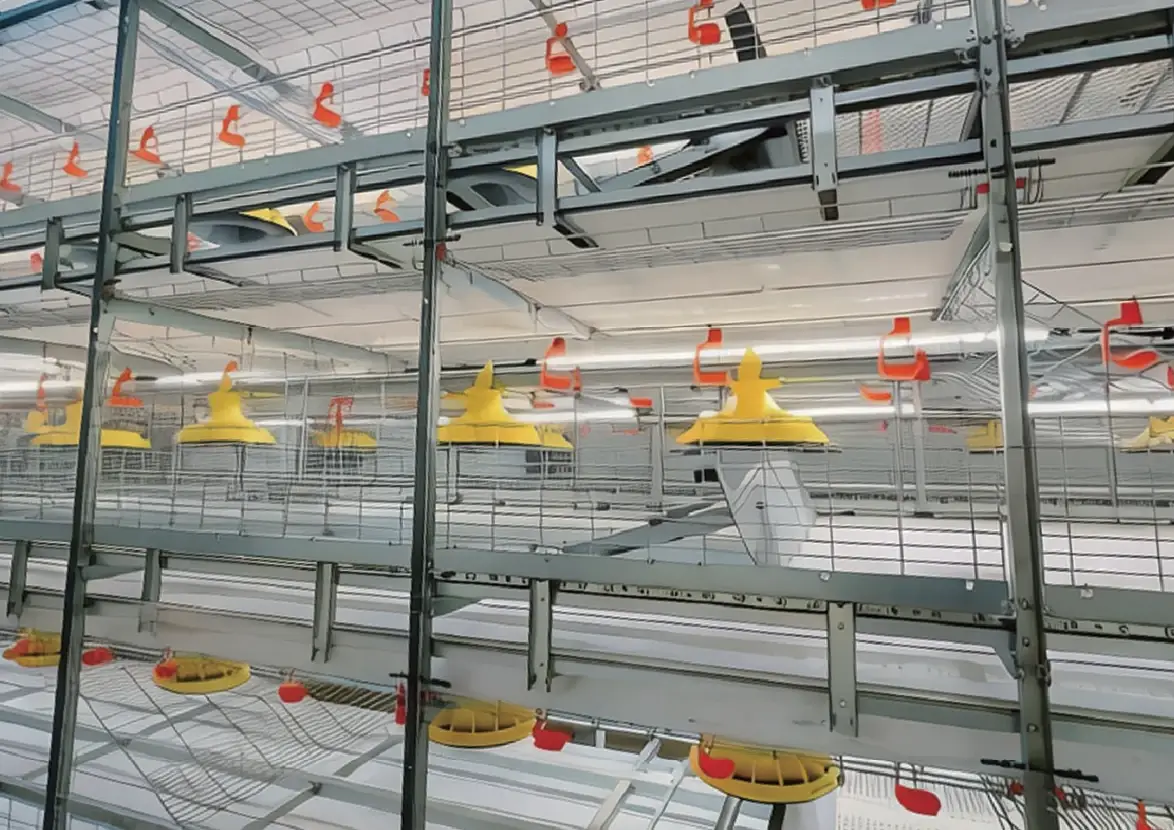
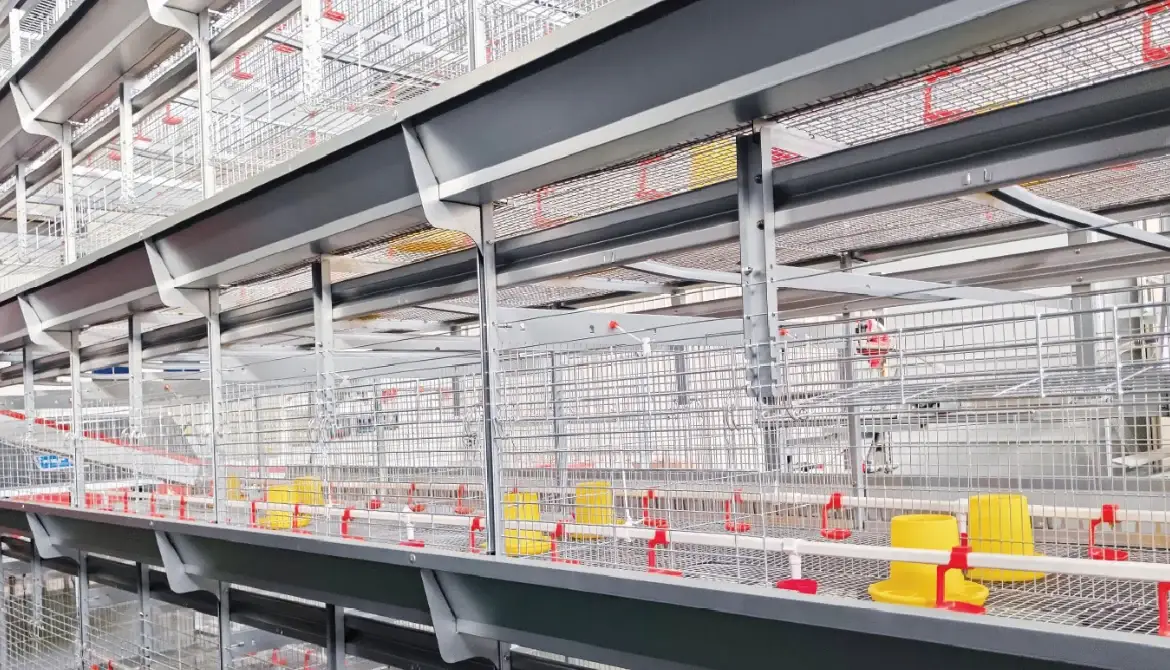
Single-row manual harvesting broiler cage — three or four tiers, with a double portal structure that makes feeding easier and gantry feeding equipment. Its cells are the roomiest of the three: 25 birds per unit cell on a 1250 mm by 1000 mm cage. Good first cage house, because everything stays reachable by hand.
Double-row manual harvesting broiler cage — a tighter footprint for the same building. The cells hold 19 birds on a 1250 mm by 800 mm cage, and the whole frame is fully welded galvanised wire. The feed machine sits in a sealed rear housing, which is there to limit disease moving along the row. Choose this when the building is fixed and you want more birds inside it.
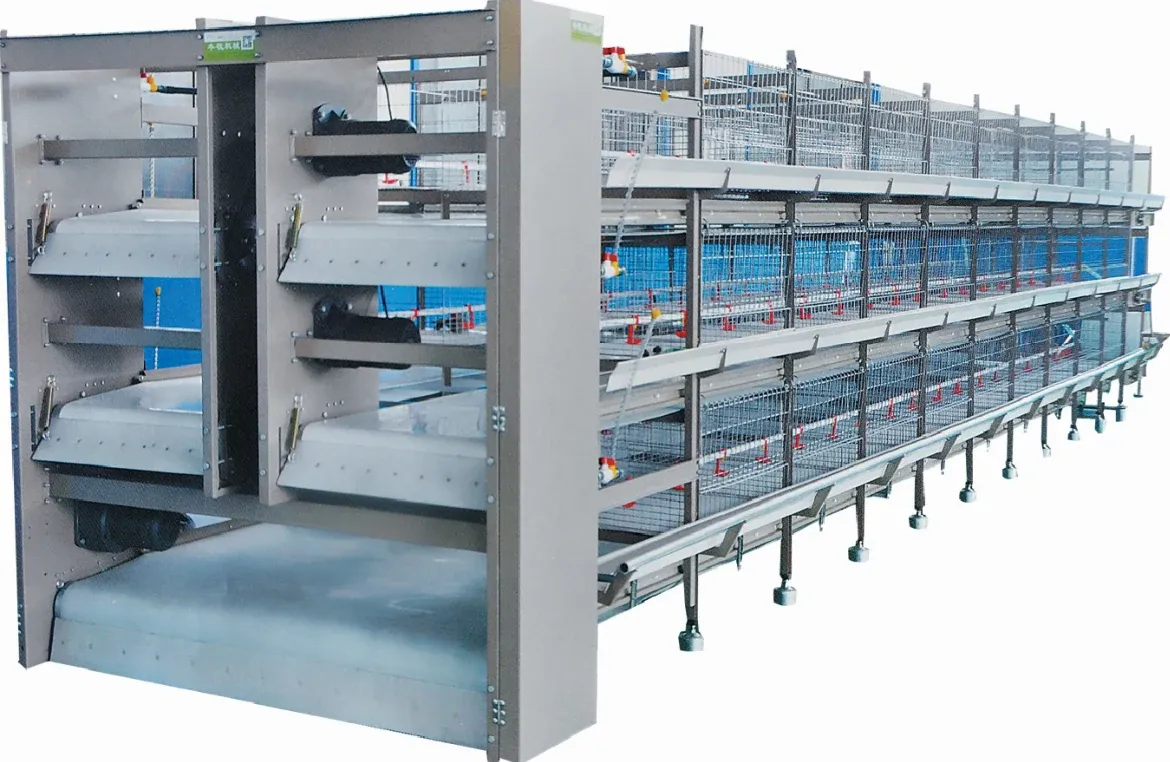
Automatic harvesting broiler cage — the birds are transported out of the house by the system itself, manure is removed daily, and the catalogue records survival rates up to 99.8% with better uniformity at market weight. Units are 3000 by 1800 mm in three-tier and four-tier builds. This is a system for a farm that sells on contract and cannot afford a bad catching night.
What cages want from you in return
Be honest about these before you order:
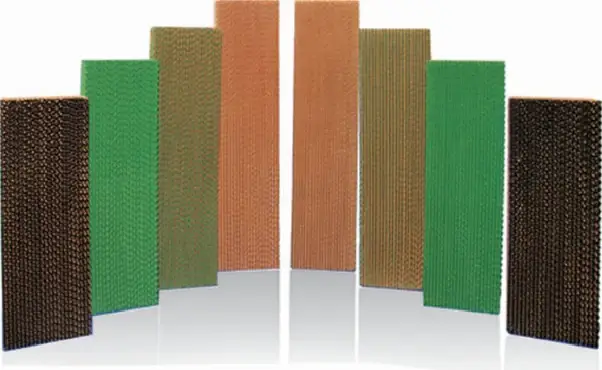
Air. More birds in the same volume means more heat and more moisture to remove. Cage houses are not forgiving in a Bangladeshi April. Read how to keep a poultry house cool through the summer before you decide on tiers — the ventilation plan and the cage plan have to be made together, not one after the other.
Power. Belts, feed lines and fans all stop when the grid does. Work out your backup before the birds arrive, not during the first load shedding of the season.
Height. Tiers need headroom, plus space above the top tier for air to move. A low shed limits you to three tiers whatever the brochure says.
A manager who looks up. A bird in the top tier is out of eye line. Problems in a cage house are found by people who walk the rows and look at every level.
If you are staying on the floor
You do not have to choose between deep litter and a full cage house. Plastic slat flooring lifts the birds off the litter while keeping the open-house layout. The panels come in four sizes — 1 m by 0.5 m, 1 m by 0.6 m, 1.2 m by 0.5 m and 1.2 m by 0.6 m — in 100% raw plastic, with leak holes sized so droppings pass through without hurting the birds’ feet. They wash down, they do not rot, and they are a reasonable half-step for a farm that wants drier birds without rebuilding the shed.
How to decide
Sit down with four numbers before you call anyone:
- Internal height of your shed, floor to the lowest beam. This decides your tier count.
- Your power situation — grid hours, generator size, and what you would lose in a four-hour cut at midday.
- Batch size you can actually sell. More birds per shed is only an advantage if the market takes them.
- What labour costs you per batch, including catching night.
Cages usually win on the first and fourth. Floor rearing usually wins when the shed is low or the power is weak. Nobody can answer this from a brochure — it depends on your building.
If you want a second opinion on your own shed, send us the length, width and internal height, your bird numbers and a photo of the inside. We will tell you what fits, and we will say so if the answer is that your building is not ready for cages yet.