
When does an automatic feeding line pay for itself?
Hand feeding costs labour, wastes feed and feeds the flock unevenly. Work out your own payback, then see what a pan line, a chain line and a silo each do.
Feed is the largest running cost on almost every poultry farm, and hand feeding wastes it in three ways at once: spillage, uneven distribution, and feed sitting in open troughs long enough to spoil in the damp. Automation is not about comfort. It is about putting the same feed in front of every bird, at the same time, without a person carrying a bucket down the row.
Work out your own number first
Ignore any payback figure quoted at you without seeing your farm. Do this instead, on paper, for one batch:
- Labour hours per day spent filling, carrying and levelling feed, multiplied by your daily labour cost and the days in a batch.
- Feed spilled or spoiled — weigh what you sweep up in a week and scale it, or estimate honestly from what you see.
- The cost of unevenness. In broilers this is spread in market weight; in layers and breeders it is uneven lay. Both cost money that never appears as a line item.
- What the birds lose on the hottest days, when feeding by hand gets delayed and feed sits out.
Add those, multiply by batches per year, and compare against a quoted system. Farms with high bird numbers and scarce labour reach a yes quickly. Small farms with family labour often do not — and we will say so.
Pan feeding: the general-purpose line
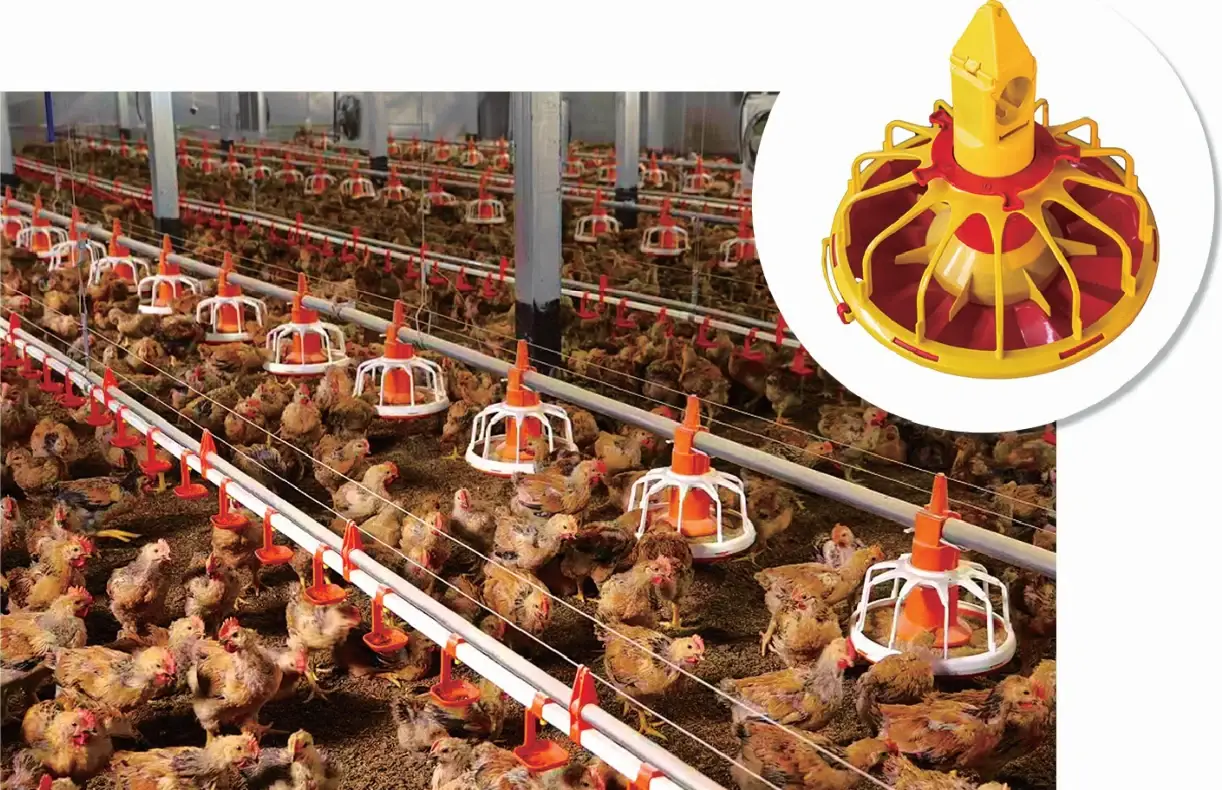
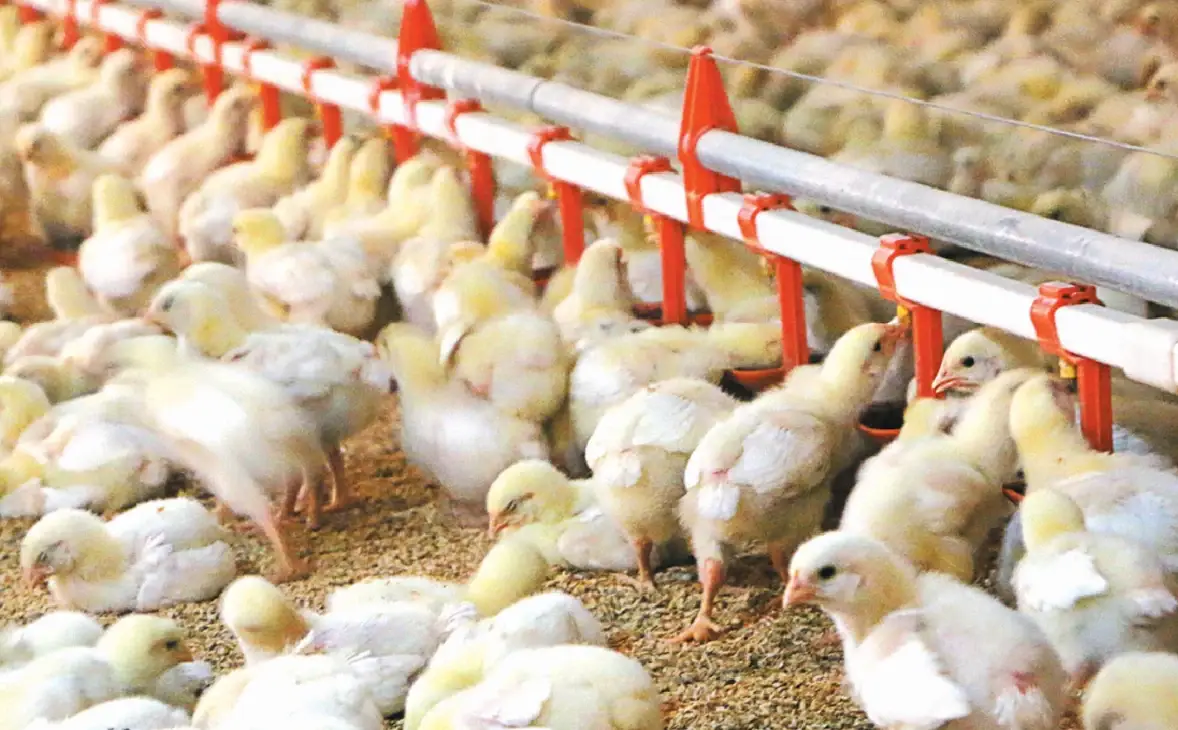
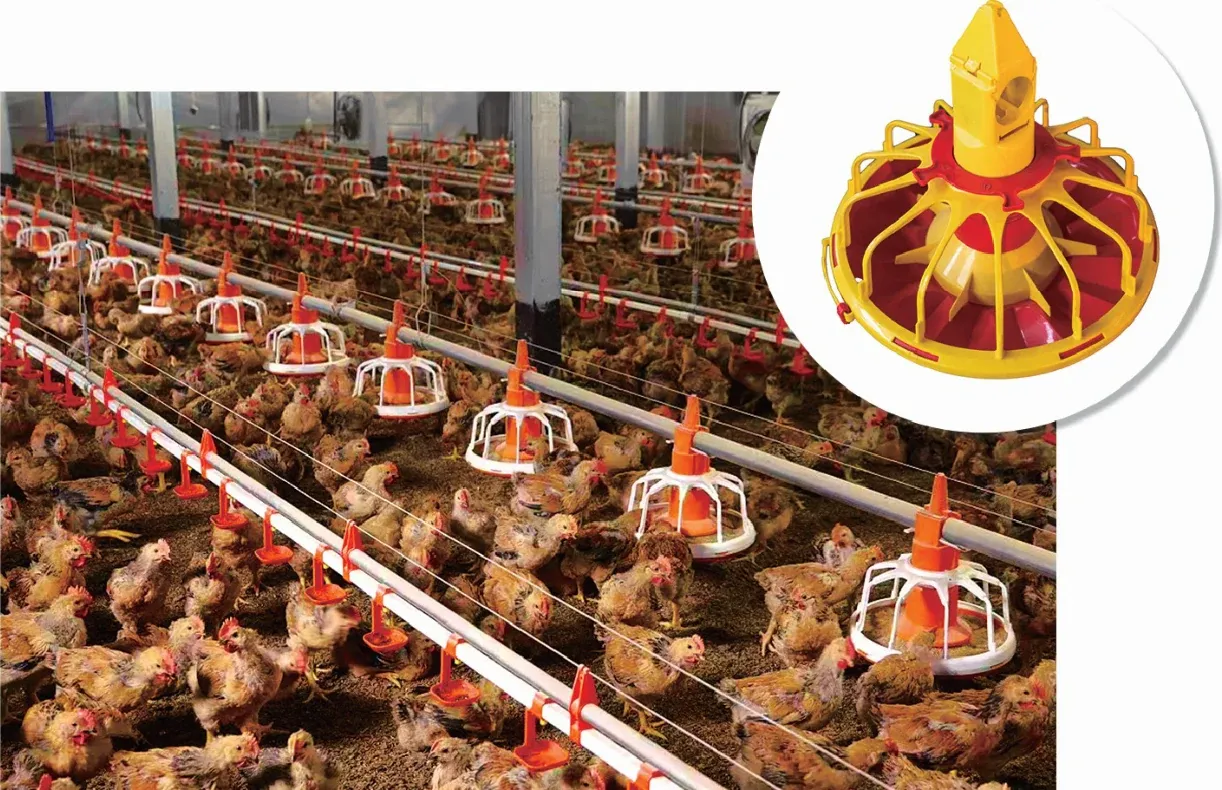
The automatic pan feeding system is the standard choice for broilers and for most layer houses:
- A material-level sensor (IFM, Germany) watches the pan level and starts and stops the conveying motor by itself. No timer to get wrong.
- A helical spring auger moves feed at 450 kg/h, in diameters from 36# to 90#, so the line is sized to the house rather than the other way round.
- The feeder pan rotates 360 degrees so birds cannot be trapped or injured, has a 14-grill design for easy access, and a spill-proof edge.
- An anti-perching device keeps birds off the pipe, which keeps droppings out of the feed.
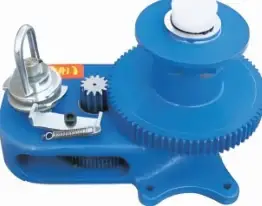
- The hanging system lifts the whole line — up to 1600 kg — clear of the floor for cleaning between batches.
That last point is worth as much as the feeding itself. A line that lifts is a house you can wash properly in a day.
Chain feeding: when the flock must eat together
Breeders are different. With restricted feeding, birds that reach feed late eat less, and a flock that eats unevenly lays unevenly.
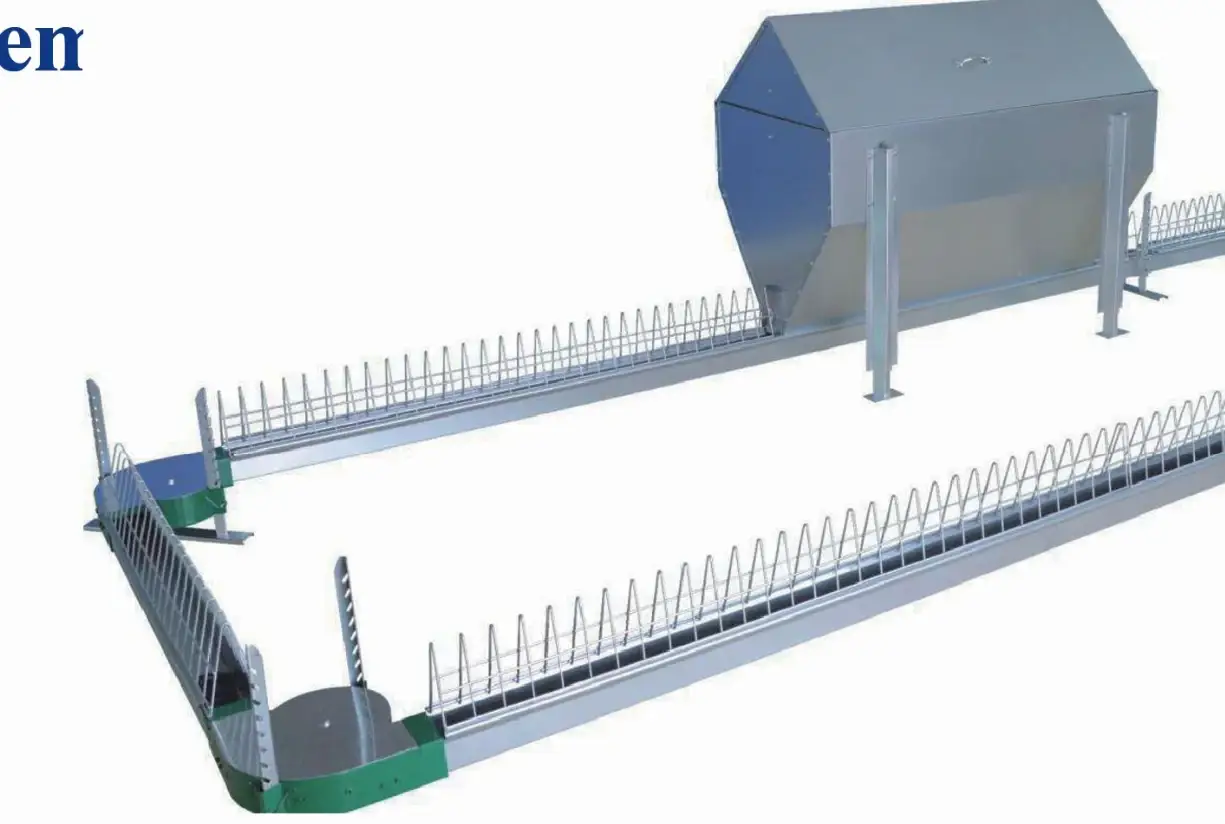
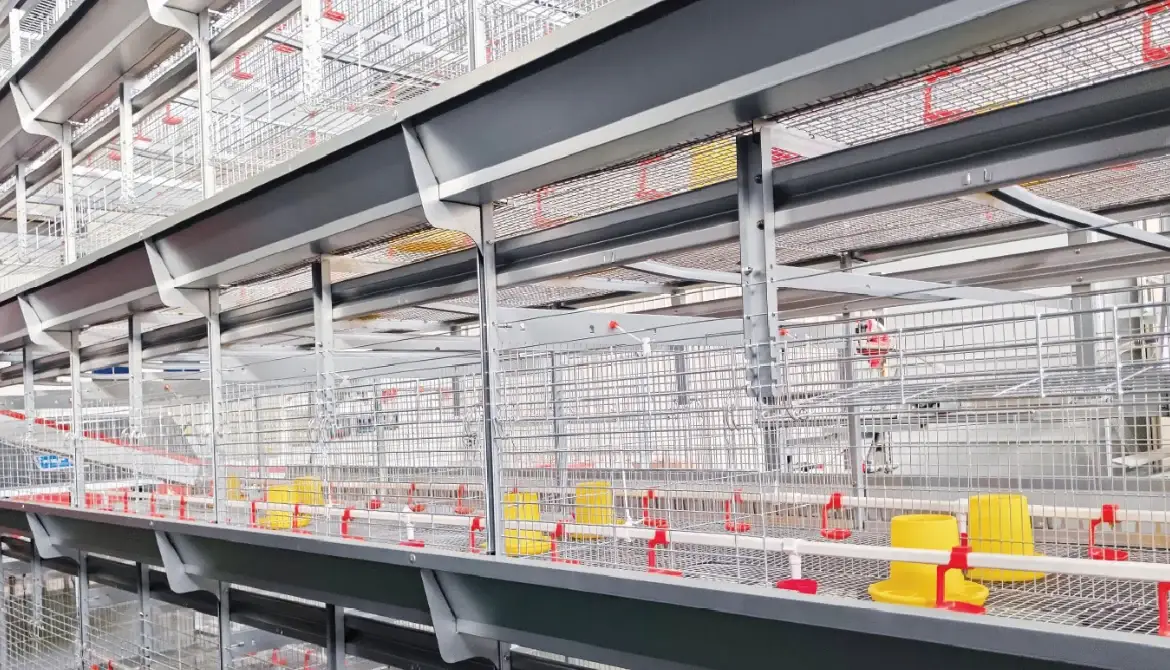
The breeder feeding system is a chain line built for exactly that problem: every feed pan fills at the same moment, so the whole flock eats together. The catalogue is direct about why that matters — it removes the stress reaction around feeding, keeps growth balanced and supports a higher laying rate. The chain-driven plastic disc delivery also breaks less feed than an auger, and the enclosed run is quieter and easier on the pipe.
Feed storage: the part people skip
A feeding line is only as good as the feed behind it. Bagged feed stacked in a damp store during the monsoon goes mouldy, and mouldy feed costs more than any labour saving.
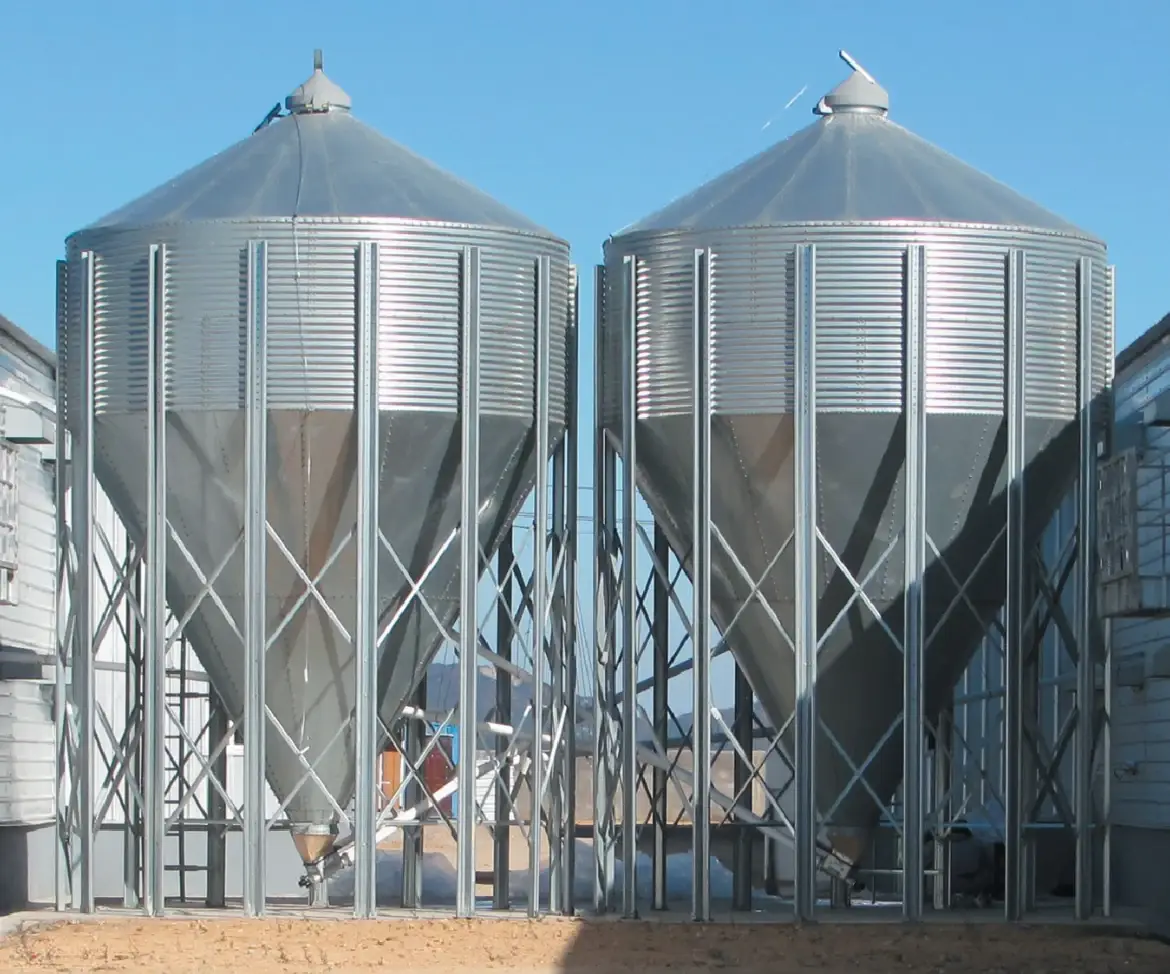
A galvanised feed silo fixes the storage end. The body is 275 g/m² hot-galvanised steel on both sides, there is an inspection hole on the hypo-cone so you can check the level without climbing in, and it comes in several capacities. Bulk delivery into a silo is also cheaper per tonne than bagged feed in most supply arrangements — worth asking your feed supplier about before you size one.
What automation does not fix
Be clear about the limits:
- It does not fix feed quality. A line distributes what you put in it.
- It does not fix a bad feeding programme. Restricted feeding still needs somebody who knows the targets.
- It does not run without power. Work out what happens to feeding during a long cut, and when you will run the line to avoid the worst of it.
- It does not remove the walk. Somebody still has to walk the house and look at birds, pans and droppings every day.
Before you order
Have these ready and a specification becomes straightforward: house length and width, number of rows, bird numbers and type (broiler, layer or breeder), your feed delivery method today, and your power supply. Send those over and we will come back with a line layout, auger size and hopper position for your building.